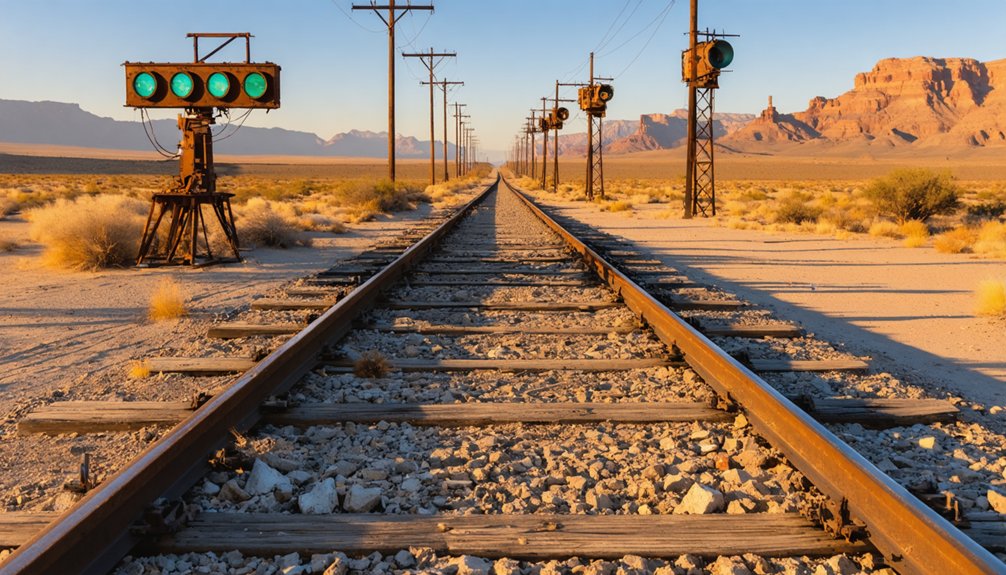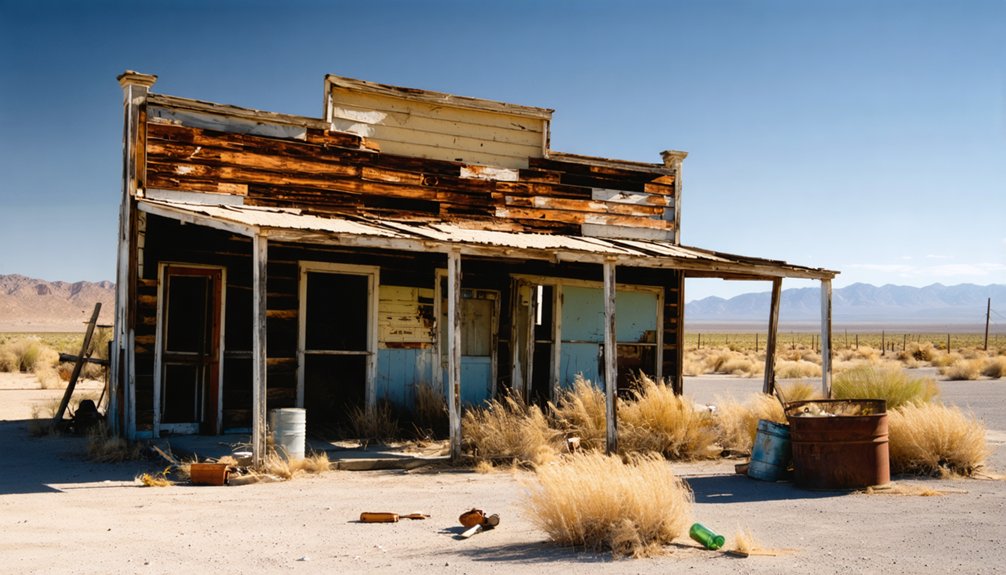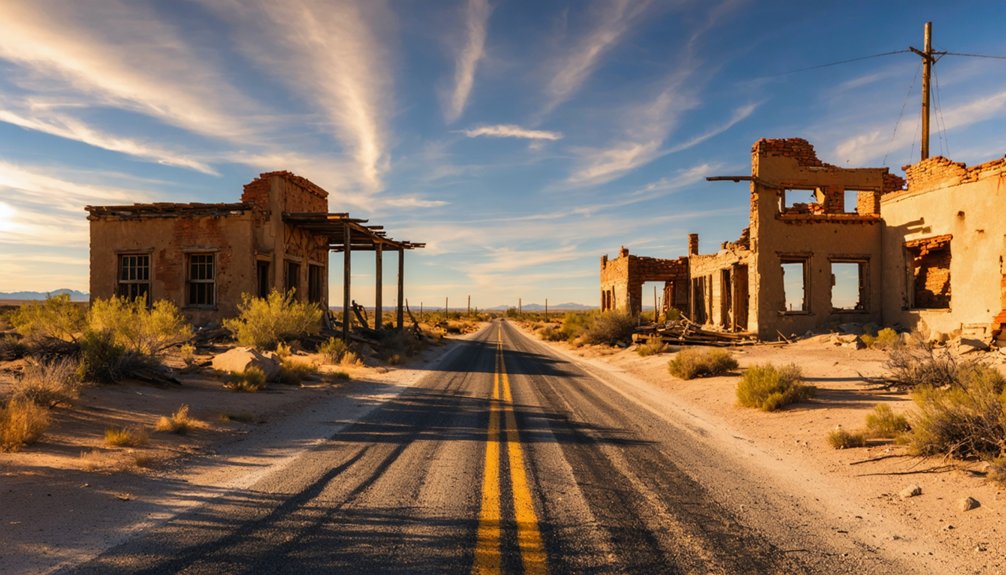
Planning a ghost town road trip to Cochran, Arizona means heading into remote Pinal County, where a mining settlement rose and vanished within a single decade. You’ll find foundations, faint railroad traces, and five remarkably intact beehive coke ovens standing across the Gila River. The roads are rough, signage doesn’t exist, and some areas sit on private land, so preparation matters. Stick around and you’ll uncover everything you need to explore this raw slice of Arizona’s industrial past.
Key Takeaways
- Cochran, founded in 1905 in Pinal County, Arizona, is a vanished mining settlement accessible via nearby towns Kearny and Winkelman on unpaved roads.
- High-clearance vehicles are essential for navigating rough, remote roads leading to Cochran, and local advice on current road conditions is strongly recommended.
- Five largely intact beehive coke ovens stand across the Gila River, offering the most striking industrial remnants, though they remain on restricted private property.
- Combine Cochran with nearby ghost towns like Hayden and Kelvin, and the Mineral Creek area, for a comprehensive central Arizona mining heritage road trip.
- Bring maps and research materials, as the site has no signage or interpretive panels; respect property boundaries and expect raw, unpolished historical exploration.
Why Cochran, Arizona Boomed and Collapsed in Just Ten Years
Cochran, Arizona barely had time to blink before it vanished. Founded in 1905, this compact desert settlement built its identity around mining history and railroad significance. The Santa Fe, Prescott and Phoenix Railway made Cochran a functional stop, pulling workers and supplies through Pinal County’s remote terrain.
Cochran blinked into existence in 1905 and never quite found its footing before the desert swallowed it whole.
Gold and silver ore needed processing, and the nearby beehive coke ovens converted mesquite wood into fuel hot enough to smelt it. That industrial purpose kept roughly 100 people fed, housed, and working.
But mining camps live and die by their ore. When the resources thinned and economic momentum shifted, Cochran emptied fast. The post office closed on January 15, 1915, and the town basically disappeared.
You’re left today with foundations, tracks, and those striking stone ovens across the Gila River.
What’s Left of Cochran, Arizona Today
What the town left behind tells its own story. Walk the townsite today and you’ll find a handful of building foundations and surviving railroad tracks marking Cochran’s edges. It’s sparse, but that rawness is exactly what draws explorers who value unfiltered history over polished museums.
The real reward sits across the Gila River at Butte, Arizona, where five beehive coke ovens still stand largely intact. These stone structures, roughly 30 feet high and 72 feet around, once converted mesquite wood into fuel for smelting gold and silver ore.
Local legends surrounding these ovens add a layer of mystery to their already commanding presence.
Note that the ovens sit on private property, so access may be limited. Historic preservation hasn’t fully claimed this site, which means you’ll experience it on its own rugged terms.
The Beehive Coke Ovens at Butte: Cochran’s Most Striking Remains
Across the Gila River from the townsite, you’ll find Cochran’s most dramatic survivors: five beehive-shaped stone coke ovens at Butte, standing roughly 30 feet high and largely intact after more than a century.
Workers used these ovens to convert mesquite wood into coke, a hotter-burning fuel that powered the smelting of gold and silver ore from surrounding mines.
Before you make the trip, know that the ovens sit on private property and may be fenced off, so confirm access conditions in advance to avoid a wasted drive.
Oven Design And Purpose
Though the town of Cochran left little behind, the five beehive coke ovens standing across the Gila River at Butte rank among the most visually striking industrial ruins in central Arizona.
Their coke oven engineering reflects a deliberate, functional design — each structure rises roughly 30 feet high with a diameter near 25 feet, built from stone in a classic beehive shape.
Workers loaded mesquite wood inside and burned it at controlled temperatures to produce coke, a denser, hotter-burning fuel used to smelt gold and silver ore from surrounding mines.
This industrial architecture solved a real problem: raw wood couldn’t generate enough heat for efficient smelting.
When you stand near these ovens, you’re looking at a working solution built for the frontier, not decoration.
Visiting Access Considerations
Before you make the drive out to see these ovens, you’ll want to know that they sit on private property — and that changes how you plan your visit. Fencing may block direct access, so you can’t simply walk up and touch the stonework.
What you can do is scout viewpoints from the road and photograph the structures from a respectful distance. Local legends around these ovens keep curiosity alive, drawing visitors who appreciate Arizona’s raw industrial past.
Preservation efforts remain limited here, meaning the site survives more by isolation than by active protection. That fragility is worth respecting.
Check current access conditions before you go, since land ownership details can shift. Go prepared, stay flexible, and treat whatever access you find as a privilege rather than a guarantee.
How to Get to Cochran, Arizona on Your Road Trip
Cochran sits in a remote stretch of Pinal County in central Arizona, and you’ll want to plan your route through nearby towns like Kearny or Winkelman to get your bearings before heading toward the Gila River corridor.
The roads leading out to the townsite can be rough and unpaved, so you’ll do better in a high-clearance vehicle than a standard passenger car.
Keep in mind that access to the most striking remnants, including the beehive coke ovens across the river at Butte, may be restricted by private property boundaries, so scout current conditions before you commit to the drive.
Nearest Towns And Routes
Since Cochran sits in a remote stretch of Pinal County near the Gila River, you’ll want to plan your approach carefully before heading out. The nearest service towns are Kearny and Winkelman, both offering fuel and basic supplies before you push into the backcountry.
From Kearny, head west along the river corridor, following routes that trace the old railroad legacy of the Santa Fe, Prescott and Phoenix Railway. That line once connected this stretch of Arizona to broader mining networks, and the roads nearby still shadow those historic paths.
Winkelman sits southeast and gives you another entry angle through the canyon terrain. Either direction rewards you with landscapes rich in mining history and wide-open desert solitude that ghost town explorers genuinely crave.
Road Conditions And Access
Getting to Cochran means accepting that the road itself is part of the adventure. Remote desert terrain rewards those who prepare before heading out.
Before you roll in, keep these three points in mind:
- Drive a high-clearance vehicle — sandy washes and rough tracks are common near the Gila River corridor.
- Confirm property boundaries — the beehive coke ovens sit on private land, and preservation efforts have occasionally led to fenced-off access points.
- Ask locals before you go — nearby residents carry local legends about the site and often know current road and access conditions better than any map.
You’re chasing a ghost town, not a theme park. Embrace the solitude, respect the land, and you’ll experience Cochran exactly as it deserves — raw and unfiltered.
No Signage, Possible Fencing: The Reality of Visiting Cochran
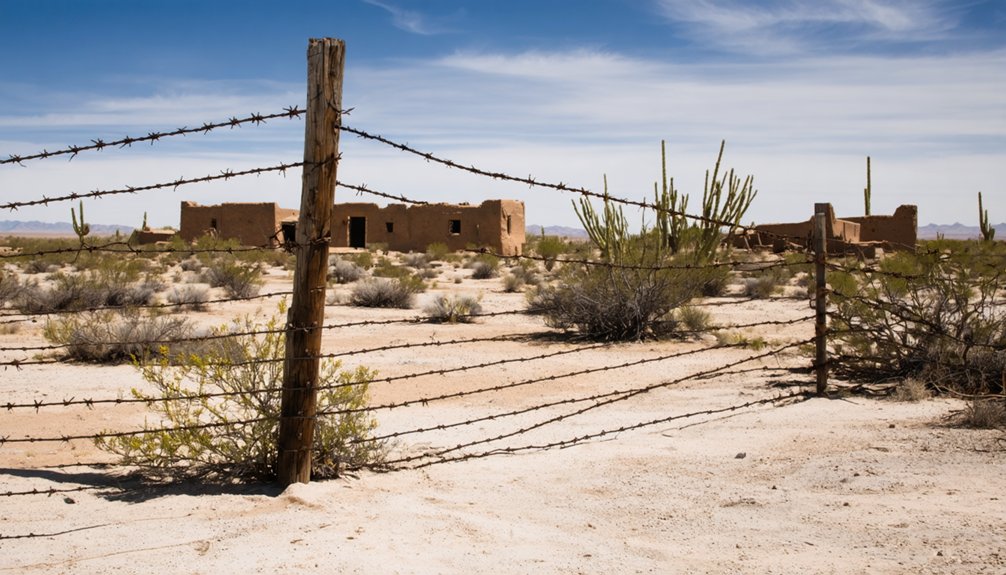
Visiting Cochran means accepting that this ghost town offers no welcome signs, no marked trails, and no curated experience waiting for you at the end of the drive. The signage absence is total — you’re orienting yourself by coordinates, instinct, and research you did before leaving home.
The coke ovens across the Gila River are the site’s most striking feature, but fencing restrictions may block your access entirely. Private property boundaries aren’t always clearly visible until you’re already standing at them. You won’t find interpretive panels or designated parking areas.
What you’ll find is raw, unfiltered history on its own terms. Come prepared with maps, realistic expectations, and respect for property boundaries. Cochran rewards curiosity, but only if you arrive ready to work for the experience.
Ghost Towns That Pair Well With a Cochran Day Trip
Cochran sits in a stretch of central Arizona rich with ghost town history, so it makes sense to build a full day around more than one stop. The Copper Corridor rewards curious travelers who value historical preservation and love chasing local legends across open desert roads.
Consider pairing Cochran with these nearby stops:
- Hayden, Arizona – A still-breathing copper town with visible smelter history and strong regional character.
- Kelvin, Arizona – A quiet remnant settlement close to the Gila River with minimal crowds.
- Mineral Creek area – Remote terrain dotted with mining-era traces worth exploring off the main route.
Each location adds context to Cochran’s story and gives you a richer picture of Arizona’s rugged, independent mining past.
Frequently Asked Questions
Who Was John S. Cochran, the Man the Town Was Named After?
Forget famous historical figures — John S. Cochran was simply the town’s first postmaster, yet local legends immortalized him by naming the entire settlement after his modest postal duties. You’ll appreciate that irony visiting today!
How Many People Lived in Cochran at Its Peak Population?
At its peak, you’d have found about 100 people calling Cochran home — a compact snapshot of ghost town history where urban decay now replaces the bustling energy of miners, merchants, and railroad workers who once thrived there.
What Railway Line Once Stopped at Cochran During Its Operation?
Once thriving, now silent — the Santa Fe, Prescott and Phoenix Railway once stopped at Cochran, connecting you to remarkable railway history and transportation development. Today, it’s reborn as the Copper Basin Railway, carrying that legacy forward.
What Types of Businesses Operated Inside Cochran During Its Existence?
You’ll find that Cochran’s historic ghost town architecture once housed a general store and boardinghouse, fueling local legends and ghost stories about the spirited souls who lived freely in this compact, fascinating mining camp.
What Specific Ores Were Smelted Using Fuel From the Coke Ovens?
With five beehive ovens fueling operations, you’ll find that ore smelting here targeted gold and silver. These fuel sources converted mesquite wood into powerful coke, burning hot enough to process precious metals from surrounding mines.
References
- https://en.wikipedia.org/wiki/Cochran
- https://www.youtube.com/watch?v=e47AB_8gCUg
- https://www.youtube.com/watch?v=lniLmEF406Q
- https://www.linkedin.com/posts/paul-marsh-9b824860_cochran-is-a-ghost-town-in-pinal-county-az-activity-7077286612987998209-MrwI
- https://www.youtube.com/watch?v=83vL1_wMB3o
- https://www.ghosttowns.com/states/az/cochran.html
- https://www.ancientpages.com/2023/07/15/arizonas-enigmatic-beehive-shaped-stone-coke-ovens/
- https://azgw.org/pinal/ghosttowns.html
- https://en.wikipedia.org/wiki/List_of_ghost_towns_in_Arizona
- https://copperarea.com/ghost-towns-copper-corridor/