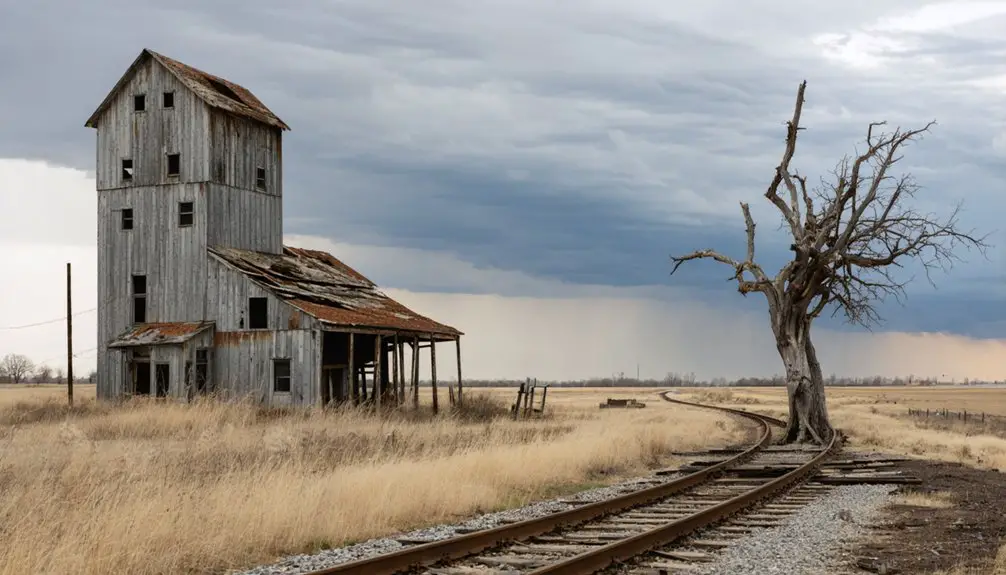
Planning a ghost town road trip to San Francisco, Minnesota means embracing a quieter kind of history. You won’t find guided tours or roadside markers — just open land, faded memories, and fragments of a community lost to railroad bypasses and economic decline. It’s a raw, unpolished stop that pairs well with nearby sites like Forestville and Nininger. Stick around, and you’ll discover exactly how to build a route worth taking.
Key Takeaways
- San Francisco, Minnesota, located in Carver County, is a ghost town with no tourist amenities, making it a raw, research-focused historical destination.
- The town’s decline stemmed from railroad bypasses, which stripped communities of economic lifelines and triggered population shifts toward more connected areas.
- No preserved structures remain; visitors interpret San Francisco’s history through open land, county records, and the Carver County Historical Society’s documentation.
- Nearby ghost towns like Nininger and Forestville offer complementary stops, adding legends, preserved structures, and broader context to your road trip.
- Build your route around regional clusters, starting at San Francisco and concluding at sites like Forestville for a well-rounded historical experience.
What Is San Francisco, Minnesota?
While California’s San Francisco draws millions of visitors each year, Minnesota’s version tells a quieter, more forgotten story. Tucked into Carver County, this ghost town exists as little more than a place name on historical registries and county ghost-town inventories.
Minnesota has its own San Francisco — no cable cars, no crowds, just a ghost town quietly fading into Carver County history.
You won’t find cable cars or crowded piers here — you’ll find open land, faded memory, and the kind of freedom that comes with standing somewhere most people have never heard of.
Local legends suggest the town once held real promise before economic shifts erased its footprint. Historic preservation efforts remain sparse, so don’t expect signage or guided tours.
Instead, treat this stop as raw Minnesota history — unpolished, unfiltered, and entirely yours to interpret on your own terms.
Why Did San Francisco, Minnesota Disappear From the Map?
When you dig into why San Francisco, Minnesota faded from the map, two culprits keep surfacing: railroad decisions and economic collapse.
If a rail line bypassed your town in Minnesota’s settlement era, you lost your lifeline for commerce, shipping, and growth almost overnight. Without that economic engine running, residents packed up and moved toward communities that still had a future.
Railroad Bypass Effects
Though no single document spells out exactly why San Francisco, Minnesota vanished, railroad bypass effects likely played a starring role—just as they did across hundreds of other Minnesota settlements. Historic railroads didn’t just carry passengers and freight—they carried economic life itself.
When rail lines shifted routes or bypassed a community entirely, businesses collapsed, residents packed up, and towns quietly disappeared from working maps.
You’ll notice this pattern repeating across Minnesota’s ghost-town history. Town relocation often followed railroad decisions, with entire communities physically moving closer to new rail corridors just to survive.
San Francisco likely couldn’t make that leap. Once the economic current shifted away, the settlement had no anchor holding people in place. What remained was a name on a county list and an empty stretch of land worth exploring.
Economic Decline Factors
Railroad bypass dealt the first blow, but economic decline finished the job. Once local industry weakened, San Francisco, Minnesota lost its reason to exist.
Industrial decline stripped away the economic foundation that kept small settlements alive. Farmers left for larger towns offering better markets, services, and opportunity. Businesses followed the customers out.
Population shifts accelerated the collapse. When enough residents departed, the community couldn’t sustain a school, a church, or a general store. Without those anchors, remaining families had little reason to stay.
The cycle fed itself until the town simply emptied out.
You’ll find this pattern repeated across Minnesota’s ghost-town landscape. San Francisco wasn’t unique — it was typical. Understanding that reality makes your road trip feel less like tourism and more like reading history firsthand.
What’s Actually Left at San Francisco, Minnesota Today?
If you’re expecting weathered storefronts or a dusty main street frozen in time, San Francisco, Minnesota will likely humble your expectations. What remains here isn’t dramatic — it’s quiet, subtle, and honest. You won’t find a preserved main street or guided tours waiting for you.
What you’ll find is a place-name on a map, fragments of local memory, and whatever historical artifacts the land and nearby county records still hold. Carver County Historical Society has documented San Francisco among its ghost-town inventory, meaning preservation efforts exist — just not on-site in any visible, tourist-ready form.
Think of your visit as a research stop rather than a roadside attraction. You’re reading the landscape, connecting dots, and piecing together a story that the ground itself no longer shouts.
Which Ghost Towns Near San Francisco, MN Are Worth Combining?
San Francisco doesn’t have to stand alone on your itinerary. Carver County holds enough forgotten corners to fill an entire weekend of exploration.
Push further into the state and you’ll find Nininger, a planned city that never became what its founders imagined, rich with local legends about ambitious dreams gone quiet.
Forestville offers something more tangible — historical preservation done right, with a state park framing what remains of a once-active community.
If you’re drawn to Iron Range stories, Elcor and Taconite Harbor add industrial weight to your route.
Each stop teaches you something different about why Minnesota settlements vanished.
String them together by region, and you’ll build a road trip that actually tells a cohesive story rather than just collecting names on a map.
How to Build a Ghost Town Route Through This Part of Minnesota
Building a ghost town route through this part of Minnesota works best when you anchor your trip around regional clusters rather than chasing scattered names across the state. Plan your stops intentionally, and you’ll move through landscapes layered with urban legends, ghost stories, and real historical weight.
- Start at San Francisco, Minnesota — let the silence set the tone.
- Add nearby abandoned settlements identified through Carver County Historical Society records.
- Finish at a documented site like Forestville, where preserved structures make history tangible.
You’re not just driving roads — you’re tracing the outline of communities that railroads abandoned, industries erased, and time quietly swallowed.
That freedom to explore forgotten places on your own terms makes this route worth every mile.
Which Local Archives Document San Francisco and Carver County Ghost Towns?
When you’re ready to dig deeper into San Francisco‘s history, the Carver County Historical Society is your most direct local resource — it’s one of the few institutions that explicitly lists San Francisco among the county’s ghost towns. Their historical records connect vanished place names to real settlement stories, giving you context that a simple map search never could.
Beyond Carver County, the Minnesota Ghost Towns directory compiles statewide entries, though its listings remain incomplete across many regions. State archives and local libraries sometimes hold plat maps, land surveys, and early census documents that preservation efforts have kept accessible.
Before you hit the road, contact these institutions directly. You’ll arrive at each stop informed, not guessing — and that preparation transforms a curiosity drive into a genuinely meaningful journey through Minnesota’s layered past.
Frequently Asked Questions
What Is the Best Time of Year to Visit San Francisco, Minnesota?
Summer’s sweet sunshine sets the perfect stage — you’ll find historical preservation efforts most accessible and wildlife viewing most vibrant from June through August, letting you freely explore San Francisco, Minnesota’s forgotten frontier at its finest.
Are There Any Entry Fees or Permits Required to Visit Ghost Town Sites?
Most ghost town sites don’t require entry fees or permit requirements, so you’re free to explore openly. Always check if a site sits on private land or within a state park before venturing out.
Is the San Francisco, Minnesota Site Accessible for Visitors With Mobility Limitations?
We don’t have confirmed details on wheelchair accessibility or mobility assistance at San Francisco, Minnesota. You’ll want to contact Carver County Historical Society directly—they can help you navigate what’s actually accessible on the ground.
Can Children Safely Participate in a Minnesota Ghost Town Road Trip?
Yes, your kids can safely join you! Prioritize child safety measures by supervising them near unstable structures. Many sites double as outdoor historical preservation lessons, turning Minnesota’s abandoned landscapes into engaging, freedom-filled adventures your whole family’ll treasure.
Are There Nearby Lodging or Camping Options for Overnight Ghost Town Trips?
You’ll find nearby campgrounds and cozy inns surrounding Minnesota’s ghost town corridors. Sleep beneath stars, explore historic architecture by day, and swap local ghost stories by firelight — it’s the ultimate freedom-seeker’s overnight adventure!
References
- https://en.wikipedia.org/wiki/List_of_ghost_towns_in_Minnesota
- https://www.ghosttowns.com/states/mn/mn.html
- https://www.reddit.com/r/minnesota/comments/199y3bd/weirdstrange_towns_in_mn/
- https://en.wikipedia.org/wiki/Category:Ghost_towns_in_Minnesota
- https://www.wikiwand.com/en/articles/List_of_ghost_towns_in_Minnesota
- https://www.youtube.com/watch?v=0f_yhfIt514
- https://www.youtube.com/watch?v=O5o19MoARvo
- https://quickcountry.com/minnesotas-abandoned-ghost-towns/
- https://www.carvercountyhistoricalsociety.org/ghost_towns.php
- https://www.youtube.com/watch?v=5bCG6B2rzZY