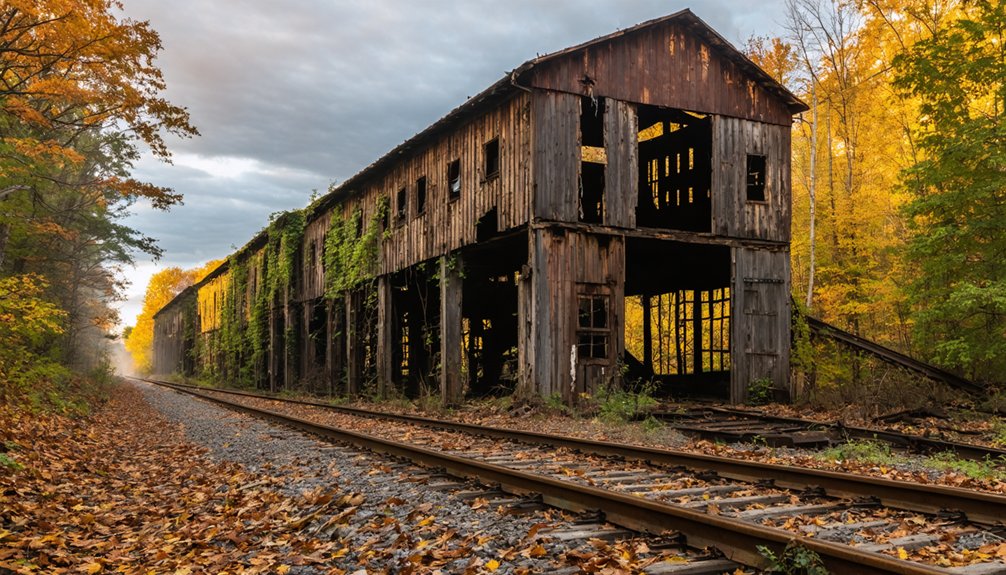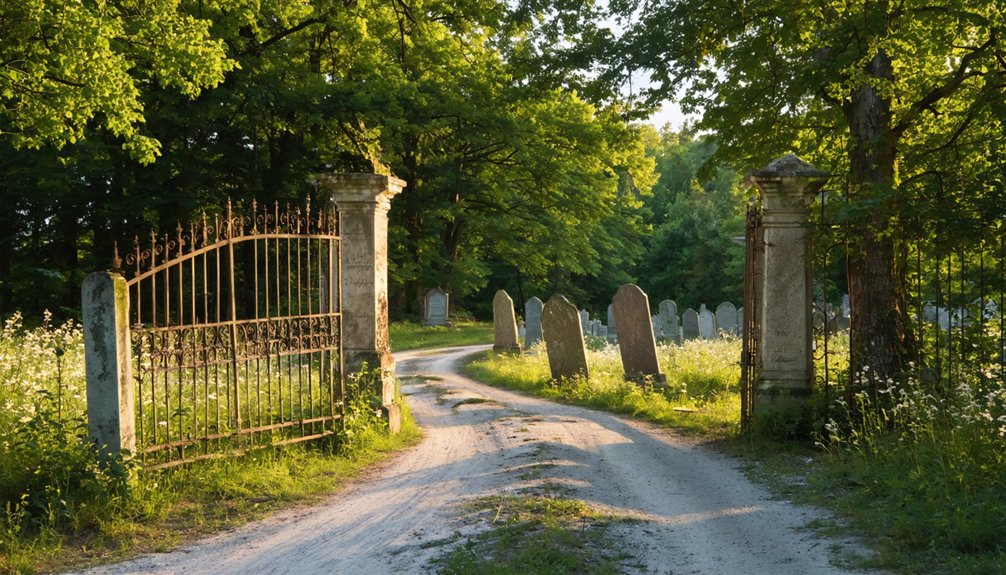
To road trip to Lick Creek, base yourself in Paoli, Indiana, then head into Hoosier National Forest with detailed maps, water, and sturdy shoes. You won’t find standing structures here — no preserved homesteads, no interpretive center. What you will find is ground once held by free Black families who purchased land directly from the U.S. government, building sovereign lives under deeply hostile laws. Their story runs far deeper than the landscape suggests.
Key Takeaways
- Base your trip in Paoli, Indiana, the Orange County seat, and follow scenic southern Indiana routes into Hoosier National Forest.
- No standing structures remain, so prepare for a walking exploration of forested terrain showing subtle traces of the settlement.
- Contact the Hoosier National Forest ranger district beforehand, as archaeological preservation work may affect site access.
- Bring detailed forest maps, water, and sturdy shoes, since no interpretive center exists at the site.
- Extend your road trip to nearby sites like Levi Coffin House and Indianapolis’s Freetown Village for fuller historical context.
What Was the Lick Creek African American Settlement?
Before Indiana became a state defined by some of the harshest Black exclusion laws in the antebellum North, free Black families were quietly putting down roots in its soil. The Lick Creek African American Settlement, tucked into Orange County near Paoli, stands as a testament to that defiance.
You’re looking at a community that built itself through direct land purchases from the U.S. government, not charity, not chance. Its historical significance lies in what it proved: that Black freedom could be cultivated, literally, in hostile ground.
Landownership patterns here tell the deeper story, with ten African American families controlling 780 acres by 1840 and peak holdings reaching over 1,500 acres by the 1850s. This wasn’t survival. This was sovereignty.
Is There Anything Left to See at Lick Creek Today?
Sovereignty built on land leaves traces even when the land changes hands. At Lick Creek today, you won’t find standing structures or preserved homesteads. What you’ll find is the landscape itself — held now within the Hoosier National Forest, where land preservation has kept the terrain largely intact.
Archaeologists continue working the soil, recovering historical artifacts that confirm where Black families farmed, worshipped, and built autonomous lives before the Civil War. The forest roads bring you through the same Orange County ridgelines those families once claimed through direct federal purchase.
You’re walking ground that once represented radical Black freedom in a state that legally discouraged Black settlement. That tension still lives in the land, quiet but unmistakable, if you arrive knowing what to look for.
The Free Black Families Who Built This Indiana Community
The families who built Lick Creek didn’t arrive as refugees — they arrived as landowners. Many came from North Carolina, guided by Quaker networks that helped free Black families secure legal footing in a state that made Black freedom precarious. Figures like Mathew Thomas, Benjamin Roberts, and Elias Roberts didn’t wait for permission — they purchased land directly from the U.S. government and built farms, kinship networks, and community institutions from the ground up.
When you visit this landscape, you’re walking through the results of deliberate, courageous choices. Genealogical research has recovered many of their names from land records and census rolls, making cultural preservation an active, ongoing process.
These weren’t forgotten people — they were founders, and the forest holds their legacy.
How to Plan Your Road Trip to Lick Creek
Reaching Lick Creek means orienting yourself toward Paoli, Indiana, the Orange County seat, which serves as your practical base before heading into the Hoosier National Forest.
From Paoli, scenic routes carry you through rolling southern Indiana terrain into land once farmed by free Black families who claimed their freedom through deed and labor.
Before you travel, research current Hoosier National Forest access conditions, as ongoing archaeological work may restrict certain areas in the interest of historical preservation.
Bring a detailed forest map, water, and comfortable walking shoes.
No interpretive center marks the site, so arriving informed matters deeply.
Contact the Hoosier National Forest’s Tell City Ranger District beforehand for guidance.
Your preparation honors the seriousness of what this landscape represents and sharpens your ability to truly see it.
What African American Heritage Sites to Pair With Lick Creek
Pairing Lick Creek with nearby African American heritage sites deepens the story you’re carrying out of the forest. Orange County sits within a broader Indiana landscape shaped by Black migration, Quaker networks, and the Underground Railroad.
Consider anchoring your itinerary around Paoli, then extending toward Levi Coffin House State Historic Site in Fountain City — one of the nation’s most significant historic landmarks tied to freedom-seeking families. Coffin’s network intersected with free Black communities across Indiana, including settlements like Lick Creek.
In Indianapolis, the Freetown Village living history program advances cultural preservation by embodying Black Indiana life in the 1870s. These sites don’t duplicate Lick Creek’s story — they expand it, letting you trace how free Black communities survived, organized, and claimed permanence across a hostile landscape.
Frequently Asked Questions
Why Did the Lick Creek Community Decline After the Civil War?
After emancipation, you’ll find that Post war migration pulled Lick Creek’s families toward new horizons. Despite African American resilience, residents departed for northern regions by 1902, leaving behind a profound legacy of freedom-built community.
What Other Names Was the Lick Creek Settlement Known By?
Like a river with many names yet one current, you’ll find this settlement’s cultural significance preserved through its aliases: Little Africa, South Africa, and Paddy’s Garden—each name echoing historical preservation of freedom’s hard-won ground.
How Large Did Black Land Ownership at Lick Creek Eventually Become?
You’ll find in property records that Black land ownership reached a remarkable peak of 1,557 acres by 1855. This land expansion reflects determined, freedom-seeking families who claimed their rightful place through direct government purchase.
Did Quakers Play a Role in Establishing the Lick Creek Settlement?
Yes, Quaker influence shaped the Settlement foundations you’d recognize today. Quaker allies helped free Black families—many from North Carolina—secure land and build lives amid Indiana’s harshest racial restrictions, making freedom tangible through community and kinship.
Is Ongoing Archaeological Research Still Happening at the Lick Creek Site?
Yes, ongoing archaeological research continues at Lick Creek. Like roots beneath dormant soil, historic preservation efforts and archaeological methods keep uncovering freedom’s buried chapters — you’re visiting a living inquiry, not just a forgotten landscape.
References
- https://www.fs.usda.gov/r09/hoosier/educational/educators/lick-creek-african-american-settlement
- https://limestonepost.org/lick-creek-settlement-holds-piece-of-black-history-indiana/
- https://www.facebook.com/HoosierNF/videos/pioneers-of-the-lick-creek-african-american-settlement/1024290505597652/
- https://en.wikipedia.org/wiki/Lick_Creek
- https://assets.speakcdn.com/assets/2380/lick-creek-4-6.pdf
- https://www.fs.usda.gov/r09/hoosier/recreation/discover-history/lick-creek-african-american-settlement
- https://www.fs.usda.gov/Internet/FSE_DOCUMENTS/stelprdb5305437.pdf
- https://www.youtube.com/watch?v=G8QwIeDdOKY
- https://www.fs.usda.gov/recarea/hoosier/recreation/outdoorlearning/recarea/?recid=81888&actid=119
- https://www.youtube.com/watch?time_continue=1&v=CZ0oRNEn-Ew