Planning a ghost town road trip to Mantua, Texas means chasing a vanished Collin County settlement that once held big ambitions. Founded in 1854 by a delegation that included future Texas Governor James Webb Throckmorton, the town flourished for about 25 years before disappearing into farmland. Today, you’ll find a cemetery, a county road, and a historical marker near Anna, Texas. Stick around, and you’ll uncover everything you need to explore this forgotten frontier town.
Key Takeaways
- Mantua’s historical marker is near Joe K. Bryant Elementary School at 2725 Bryant Farm Road, with coordinates 33° 22.674′ N, 96° 33.935′ W.
- Head north on Bryant Farm Road 0.2 miles from Mantua Road (County Road 371) to locate the Texas Historical Commission marker erected in 2011.
- Wear boots and long pants, as exploring creek banks and collapsed structures requires navigating thorns and rough terrain.
- Pack water, a camera, a notebook, and a printed map, since GPS coverage near the site can be inconsistent.
- Mantua Cemetery and County Road 371 are the most accessible surviving remnants of this vanished 1854 Texas settlement.
Why Mantua Is One of Collin County’s Most Underrated Ghost Towns
Most ghost towns leave something behind — a crumbling storefront, a rusted sign, or at least a few weathered walls. Mantua leaves almost nothing. Founded in 1854, this north Collin County settlement thrived for 25 years before vanishing entirely into farmland and housing developments. Yet its cultural significance runs deep.
James Webb Throckmorton, a future Texas governor, helped establish it. Land came from the son of Texas hero Collin McKinney. A seminary was planned. Real ambition once lived here.
Today, preservation efforts amount to a single historical marker erected in 2011 and a cemetery bearing the town’s name. That quiet absence is exactly what makes Mantua worth your attention. You’re not just visiting a forgotten place — you’re uncovering a story most Texans don’t even know existed.
The History Behind This Vanished Collin County Settlement
On February 23, 1854, a delegation that included James Webb Throckmorton — then a state legislator, later a Texas governor — purchased 200 acres from a son of Texas hero Collin McKinney and set aside 25 of them for something ambitious: a town and a seminary in what’s now north central Collin County.
This historical land grant birthed one of the county’s oldest settlements. Three facts define Mantua’s ghost town legends:
- The town flourished for roughly 25 years before vanishing entirely
- Its name likely derives from an 18th-century French word for a cloak worn by women
- Only Mantua Cemetery and Mantua Road survived the town’s disappearance
You’re fundamentally pursuing a settlement that time erased, leaving behind little more than markers and memories.
How a Future Texas Governor Founded Mantua in 1854
When you trace Mantua‘s origins, you’ll find a surprising political figure at its center: James Webb Throckmorton, then a state legislator and future Texas governor.
In 1854, he led a delegation that purchased 200 acres from a son of Texas hero Collin McKinney, securing the land that would become the town.
On February 23 of that year, the group set aside 25 acres specifically for town development and a seminary, officially putting Mantua on the map.
Throckmorton’s Role In Founding
Before Mantua became a ghost town frozen in Texas history, it was brought to life in 1854 by a delegation that included one of the state’s most ambitious political figures—James Webb Throckmorton. At the time, he was a state legislator, but he’d later become Texas governor. His involvement makes Mantua significant to both historical preservation and local legends.
Throckmorton’s delegation made three decisive moves:
- Purchased 200 acres from a son of Texas hero Collin McKinney
- Set aside 25 acres on February 23, 1854, for town development
- Planned a seminary as part of the community’s foundation
You’re fundamentally walking ground shaped by a future governor’s vision—one bold enough to carve an entire town from raw Texas land.
The 1854 Land Purchase
February 23, 1854, marks the day Throckmorton’s delegation made it official—purchasing 200 acres from a son of Texas hero Collin McKinney and immediately carving out 25 of those acres for a town and seminary.
This historical land acquisition wasn’t just a real estate transaction; it was a deliberate act of community building on the Texas frontier.
You can appreciate how purposeful this founding was when you consider that planners simultaneously designated land for both civic life and education.
That kind of intentional vision shaped Mantua’s early identity.
Today, ghost town preservation efforts honor that vision through the 2011 Texas Historical Commission marker.
The land itself has transformed into farmland and housing, but knowing what once stood here makes visiting Mantua’s marker a genuinely meaningful experience.
How to Pronounce Mantua and Where the Name Comes From
Before you arrive, you’ll want to know how to say the town’s name correctly: it’s MAN-too-AY, not the way most people assume.
The name likely comes from an 18th-century French word for a mantle or cloak, particularly the type worn by women.
That elegant linguistic origin feels almost ironic for a rugged Texas ghost town that’s long since faded into farmland.
Pronouncing Mantua Correctly
If you’re going to talk about Mantua, you’ll want to get the name right — it’s pronounced MAN-too-AY. This small distinction carries real cultural significance, connecting you to the town’s French linguistic roots. Here’s what you need to know:
- The name likely derives from an 18th-century French word meaning a mantle or cloak, traditionally worn by women.
- Mispronouncing it as “MAN-choo-ah” immediately signals unfamiliarity with the town’s heritage.
- Saying it correctly honors preservation efforts that keep Mantua’s memory alive, even as the physical town has vanished.
Getting the pronunciation right isn’t just a courtesy — it’s a small act of respect for a community that existed, flourished for 25 years, and quietly disappeared into the Texas landscape.
French Origins Of Mantua
Now that you know how to say it, it helps to understand where the name actually comes from. The Mantua origins trace back to French influence, specifically an 18th-century French word meaning a mantle or cloak — the kind women commonly wore during that era.
It’s a surprisingly elegant linguistic root for a rugged Texas settlement carved out of Collin County in 1854.
That French connection gives Mantua a distinct character that sets it apart from the countless Texas towns named after founders or geography.
Whoever chose the name had a cultivated sensibility, suggesting the early settlers weren’t simply building a town — they were crafting an identity.
Even as a ghost town, that identity lingers, embedded in a name that’s outlasted every structure the founders ever built.
Meaning Behind The Name
Most Texas ghost towns carry names you can figure out phonetically, but Mantua isn’t one of them — it’s pronounced MAN-too-AY, a detail that catches most first-time visitors off guard.
The name likely traces back to an 18th-century French word meaning mantle or cloak, traditionally worn by women. That layered origin adds texture to the local legends surrounding this vanished community.
Before you arrive, keep these details in mind:
- Pronounce it MAN-too-AY, not MAN-choo-ah
- The French root connects to ideas of covering or concealment — fitting for a town that fundamentally disappeared
- Ghost stories here feel amplified knowing even the name carries hidden meaning
You’ll appreciate the history more once you understand what you’re actually saying when you speak its name.
How to Find the Mantua Ghost Town Marker Near Anna, Texas
Finding the Mantua ghost town marker is straightforward once you know where to look. Head to Collin County and follow Mantua Road, also known as County Road 371, along the county’s northern edge.
Finding the Mantua ghost town marker is easy — just head to Collin County and follow Mantua Road.
Turn north onto Bryant Farm Road, and you’ll spot the marker on your left after just 0.2 miles. It sits in front of Joe K. Bryant Elementary School at 2725 Bryant Farm Road, Anna, TX 75409.
The Texas Historical Commission erected this marker in 2011, reflecting serious preservation efforts to honor Mantua’s cultural significance as one of Collin County’s earliest communities.
Coordinates 33° 22.674′ N, 96° 33.935′ W will guide you precisely.
Once you’ve visited the marker, sturdy footwear helps if you’re exploring the creek banks where faint traces of the old town remain.
What Remains at the Mantua Town Site Today
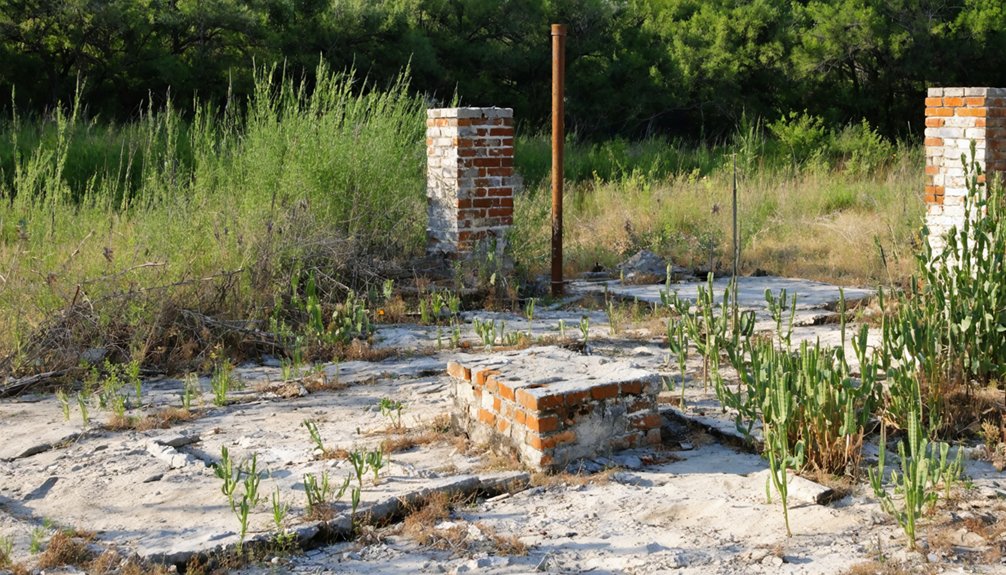
Once a thriving community for 25 years, Mantua has left almost nothing behind. When you visit today, you’ll find the original town site swallowed by farmland and housing developments. However, three historical artifacts and landmarks still connect you to this vanished world:
- Mantua Cemetery, quietly preserving the memory of early settlers
- Mantua Road (County Road 371), tracing the town’s original northern boundary
- A small collapsed structure hidden along a creek bank, reachable only through trees and thorns
Preservation efforts culminated in a 2011 Texas Historical Commission marker, now standing in front of Joe K. Bryant Elementary School on Bryant Farm Road. That marker remains your clearest physical link to Mantua’s past.
Beyond it, nature and development have reclaimed everything else.
What to Wear and Bring for the Mantua Road Trip
Now that you know what to expect at the site, dressing and packing smart will make the difference between a frustrating visit and a rewarding one. Wear sturdy, closed-toe shoes or boots since reaching the collapsed creek-side structure means pushing through trees and thorns. Long pants protect your legs on that rough terrain.
Pack water, a camera, and a notebook to document any historical artifacts or landscape details worth remembering. A printed map helps since GPS coverage can be inconsistent near Bryant Farm Road.
Talk to locals if you can — they often carry local legends about Mantua that no historical marker captures. Keep your visit flexible, your curiosity sharp, and you’ll walk away with far more than you expected from this vanished Texas community.
Why Only a Cemetery and a Road Sign Survived
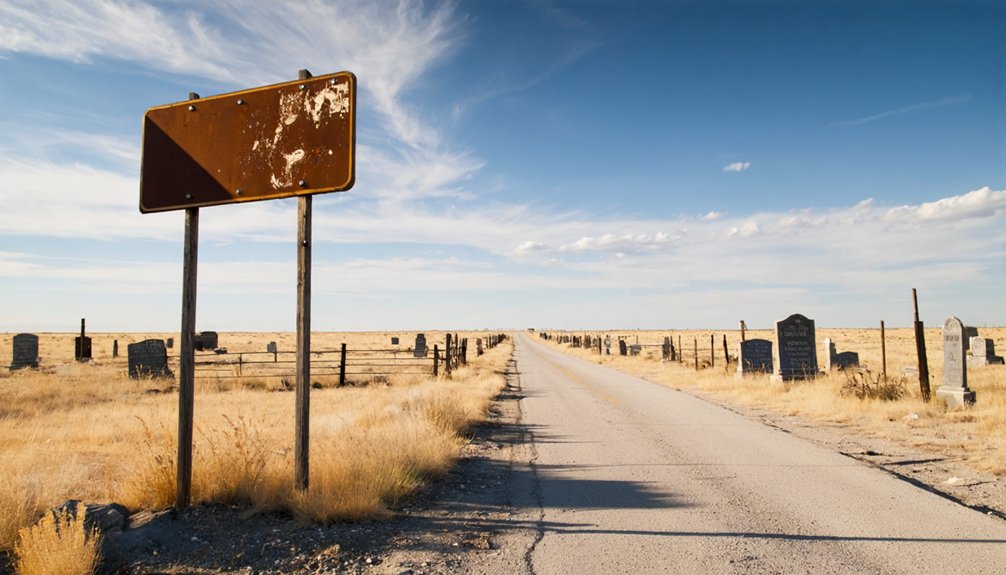
Mantua flourished for roughly 25 years before quietly disappearing into the north Collin County landscape, leaving almost nothing behind. Historical preservation wasn’t a priority when the town faded, so farmland and housing swallowed the original site whole. Yet two remnants survived through community nostalgia and practical necessity:
- Mantua Cemetery – Active burial grounds demand ongoing care, giving locals reason to maintain the land.
- Mantua Road (County Road 371) – Infrastructure outlasts settlements because roads serve whoever comes next.
- A 2011 Historical Marker – The Texas Historical Commission finally documented what time erased.
When you visit, you’ll realize survival wasn’t accidental. Cemeteries hold family connections too personal to abandon, and roads simply never stop being useful. Everything else became someone’s field.
How the New Mantua Community Reimagines the Ghost Town’s Name
While the original Mantua vanished into farmland within a generation, a new home community has claimed its name and reimagined what it once promised: small-town living rooted in community. Developers chose the name deliberately, connecting modern residents to local legends and the frontier spirit that shaped Collin County’s earliest settlements.
You won’t find formal preservation efforts tied to this new development, but the name itself carries weight. It keeps Mantua alive in conversation, on street signs, and in neighborhood branding long after the original town disappeared.
For you as a road tripper, it’s worth noting the contrast: one Mantua crumbled quietly, while another rises with fresh infrastructure. The ghost town gave its name a second life, even if the original streets exist only in historical records.
Frequently Asked Questions
What County Incorrectly Lists Mantua as a Grayson County Ghost Town?
You’ll find that Texas GenWeb incorrectly lists Mantua in Grayson County’s abandoned settlements, but it’s actually in Collin County. Don’t let this ghost town history mix-up throw off your adventure-seeking spirit!
What Are the Exact GPS Coordinates for the Mantua Historical Marker?
Grab your GPS, fellow explorer! You’ll find Mantua’s ghost town history immortalized at historical landmarks coordinates 33° 22.674′ N, 96° 33.935′ W — pinpointing exactly where this vanished 1854 community’s marker stands today.
Which Elementary School Is Located Near the Mantua Historical Marker?
You’ll find Joe K. Bryant Elementary School standing near the Mantua historical marker, making it one of the area’s most recognizable local landmarks connecting you to this fascinating ghost town history on Bryant Farm Road.
What Is the Postal Address Closest to the Mantua Historical Marker?
You’ll find the closest postal address to the Mantua historical marker at 2725 Bryant Farm Road, Anna, TX 75409, where historic preservation meets local legends, connecting you to this hauntingly beautiful ghost town’s forgotten past.
How Many Acres Were Originally Purchased to Establish Mantua in 1854?
When tracing ghost town origins, you’ll discover the delegation purchased 200 acres for Mantua’s historical land purchase in 1854, then carved out 25 acres specifically for the town and seminary’s freedom-filled development.
References
- https://www.mantuantx.com/the-much-storied-history-of-mantua-texas/
- http://texasghosttowns.blogspot.com/2014/02/mantua-collin-county-february-2014.html
- https://www.mantuantx.com/community/
- https://usgenwebsites.org/TXGrayson/ANewLand/Towns/Mantua/GhostTown.html
- https://www.hmdb.org/m.asp?m=223613