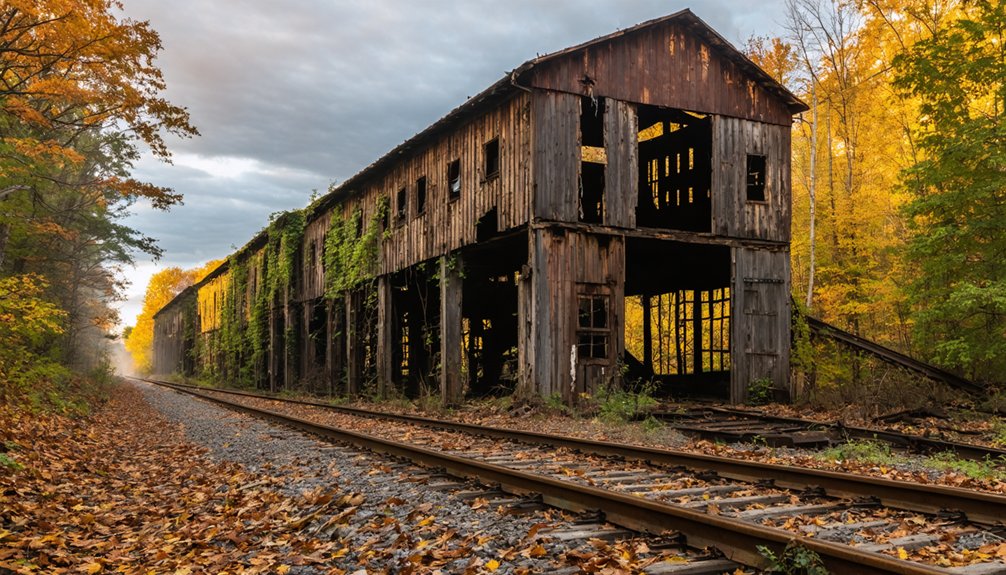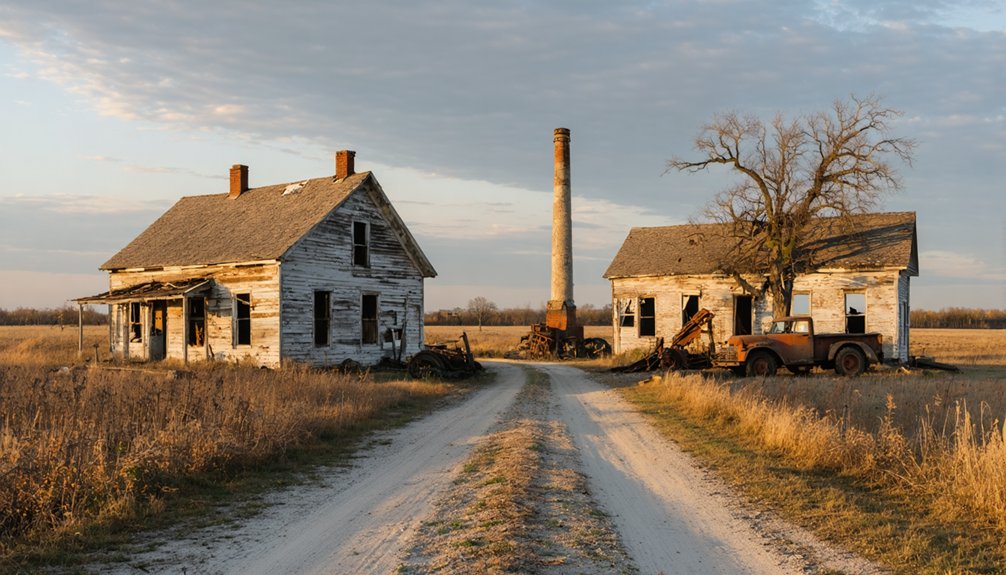
Tremont, Indiana isn’t your typical ghost town — there are no crumbling buildings or rusted storefronts waiting for you. It’s a community swallowed entirely by Indiana Dunes State and National Parks, leaving behind little more than Tremont Road and a fascinating backstory. You’ll reach it via U.S. Highway 12 in Porter County, where sand dunes now stand in place of a once-ambitious settlement. Stick around, and you’ll uncover everything you need to plan your visit.
Key Takeaways
- Tremont, Indiana, once a thriving resort town, is now fully absorbed into Indiana Dunes State and National Parks, leaving no historic buildings standing.
- Access the site via U.S. Highway 12, with Tremont Road serving as the most direct route to the former townsite.
- The South Shore Line‘s Dune Park stop offers an atmospheric, historically fitting arrival point for exploring the ghost town area.
- Trails like Mount Tom and Dune Succession allow visitors to walk through the landscape where Tremont’s streets and structures once existed.
- Visit on weekdays during spring or fall for quieter, more immersive ghost town exploration with fewer crowds and dramatic scenery.
What Is Tremont, Indiana: and Is It Worth Visiting?
Where exactly do you go when a town no longer exists? In Tremont’s case, you head straight into Indiana Dunes State Park, where this ghost town quietly dissolved into protected parkland.
When a town vanishes, you don’t mourn it — you follow it straight into the dunes.
Once a lively resort community and South Shore Line rail stop, Tremont thrived along what’s now U.S. Highway 12 before federal land acquisition erased nearly every trace.
Today, you won’t find abandoned structures lining forgotten streets. Instead, local folklore, a road bearing the Tremont name, and scattered picnic areas serve as the town’s only monuments.
That absence is precisely what makes it worth visiting. If you crave open landscapes, transportation history, and the raw honesty of a place swallowed by time and dunes, Tremont delivers something most preserved historic towns simply can’t.
From New City West to Tremont: A Quick History
Before Tremont earned its name, it started as New City West in 1833, a settlement born from the collapse of an even bolder dream. Nearby City West had aimed to rival Chicago as a Lake Michigan port, but the Panic of 1837 crushed those ambitions and scattered its residents.
New City West quietly absorbed what remained.
By around 1908, the South Shore Line established a station there, and the name Tremont took hold, reportedly referencing three prominent local dunes — a detail still tied to local legends about the landscape’s identity.
The community grew into a resort stop rather than a formal town.
Decades later, federal preservation efforts absorbed the entire area into Indiana Dunes National Park, erasing most physical traces and cementing Tremont’s ghost town status.
Why Did City West Collapse and How Did It Create Tremont?
City West’s story begins with outsized ambition — early settlers in the 1830s believed the Lake Michigan shoreline could anchor a port town powerful enough to rival Chicago. Then the Panic of 1837 hit, credit dried up, and that dream collapsed under its own weight. Urban decay set in fast, and residents abandoned City West entirely.
What rose from that failure was New City West, a quieter, more practical settlement built along the Detroit-Chicago road. By around 1908, the South Shore Line established a station there, and the name Tremont stuck — a nod to three prominent nearby dunes.
Rather than chasing Chicago’s shadow, Tremont found its identity as a resort stop. Today’s preservation efforts within Indiana Dunes parks keep that layered history worth exploring.
Where Exactly Is the Tremont Townsite Today?
If you’re searching for the Tremont townsite today, you’ll find it absorbed into Indiana Dunes State Park and Indiana Dunes National Park in northern Porter County, near the intersection of U.S. Highway 12 and County Road 100 East in Westchester Township.
The original buildings are long gone, so you won’t stumble across a preserved downtown—instead, park land and dune scenery have completely replaced the settlement.
Your best on-site clues are Tremont Road and nearby picnic area names, which serve as quiet reminders that a real community once stood here.
Current Townsite Location
Where exactly can you find the old Tremont townsite today? You’ll locate it in northern Porter County, Indiana, within Indiana Dunes State Park and Indiana Dunes National Park. The historic intersection of U.S. Highway 12 and County Road 100 East marks the general area where the community once stood.
Don’t expect historic architecture or traditional preservation efforts here. Federal land acquisition demolished most structures during the 1960s and beyond, leaving the townsite absorbed entirely into protected parkland. What remains is largely natural landscape shaped by dunes and vegetation.
Your clearest physical reminder is Tremont Road itself, along with nearby picnic area names that quietly honor the settlement’s memory. The townsite exists today as open park land rather than a recognizable historic district you can walk through.
Nearby Park Landmarks
Several park landmarks help you orient yourself to where Tremont once stood. Local legends tie the name to three prominent dunes visible across the landscape, giving you natural reference points as you explore.
While abandoned structures no longer mark the townsite, these landmarks keep the memory alive:
- Tremont Road – the most direct physical reminder of the settlement’s name
- Indiana Dunes State Park picnic areas – positioned near the former community’s footprint
- The three dunes formation – the geographic inspiration behind the Tremont name
- Former South Shore Line station area – the rail stop that officially put Tremont on the map
Use these landmarks as your compass. They won’t show you a preserved downtown, but they’ll ground you in the story.
How Do You Get to Tremont Inside Indiana Dunes National Park?
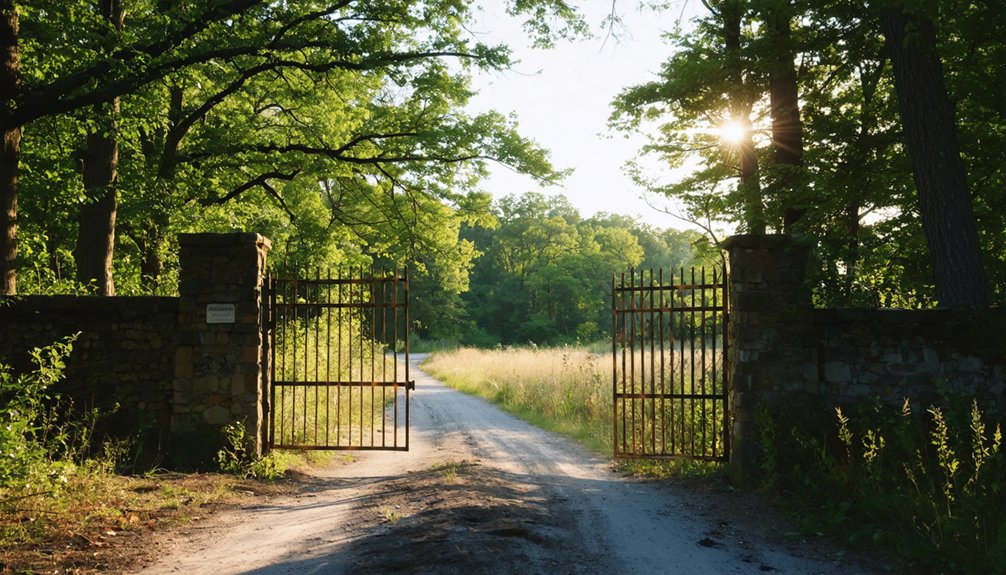
You can reach the Tremont townsite by heading along U.S. Highway 12, where landmarks like the dune ridgelines and park signage help orient you to the area.
Once on Tremont Road, you’re tracing the same corridor that once carried travelers, rail passengers, and resort visitors into this now-vanished community.
If you’re a rail enthusiast, keep an eye out for the South Shore Line station area, which gave Tremont its name and once made it a recognized stop between Chicago and Michigan City.
Tremont’s Road Access Points
Reaching the former Tremont townsite means traversing a landscape that’s now firmly inside Indiana Dunes National Park, where U.S. Highway 12 serves as your primary corridor. You’ll find no abandoned buildings marking the spot, but the roads still tell the story.
Use these access points to navigate efficiently:
- U.S. Highway 12 – your main east-west route through the park
- County Road 100 East – intersects Highway 12 near the historic townsite
- Tremont Road – the most direct named reminder of the settlement
- Park scenic viewpoints – positioned along trails where the former community once stood
Keep your map handy because signage is minimal. The landscape rewards explorers who arrive prepared and ready to read the terrain on their own terms.
Nearby Highway 12 Landmarks
Highway 12 doesn’t just connect you to Tremont’s former townsite — it connects you to the entire Indiana Dunes story. As you drive this historic corridor, you’re tracing the same route that once carried travelers between Detroit and Chicago, past settlements fueled by ambition and eventually swallowed by time.
Watch for pull-offs near the park’s main entrances, where interpretive signs hint at local legends surrounding City West’s failed rivalry with Chicago. The road itself passes remnants of historical architecture, weathered structures that survived federal land acquisition and still anchor the landscape’s memory.
Tremont Road branches directly off Highway 12, marking your clearest turn toward the ghost town’s heart. Keep your eyes open — this stretch rewards curious drivers who slow down and actually look.
South Shore Line Station Area
Once the heartbeat of Tremont’s identity, the South Shore Line station gave this quiet dune settlement its name and its purpose — and today, the rail line still runs through Indiana Dunes National Park, offering one of the most atmospheric ways to arrive.
Board at Chicago or nearby stops and step off into living history shaped by local legends and ongoing preservation efforts. Here’s how to navigate the station area:
- Ride the South Shore Line to the Dune Park stop
- Follow Tremont Road toward the historic townsite
- Look for interpretive park signage marking former structures
- Ask rangers about preservation efforts protecting remaining traces
You’ll feel the freedom of arriving car-free, exactly as early 20th-century resort visitors once did — no highway required.
What Physical Remnants Survive at the Tremont Townsite?
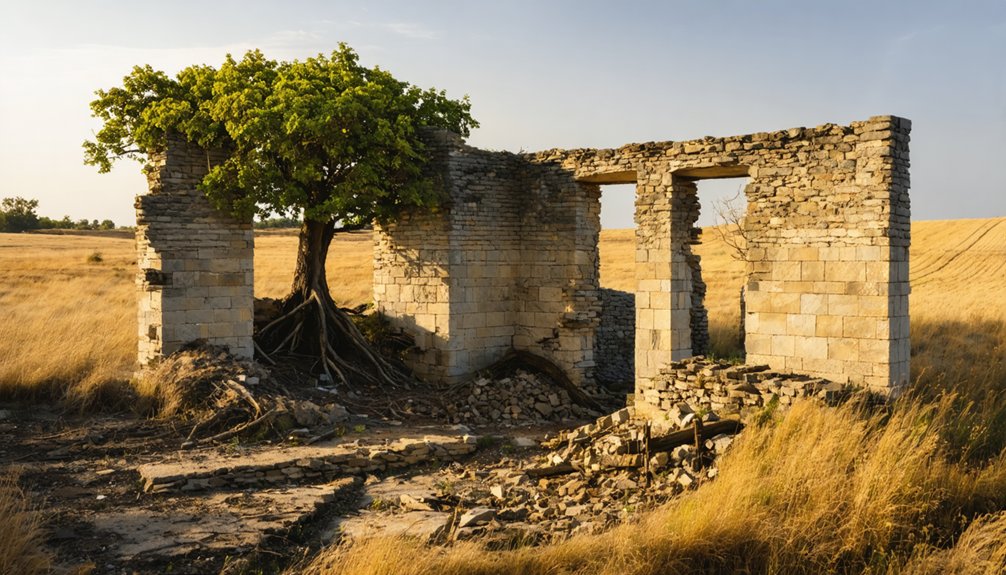
Though Tremont once buzzed with hotels, taverns, and rail passengers, you’ll find almost nothing standing at the original townsite today. Federal acquisition erased most structures during the 1960s expansion of Indiana Dunes National Lakeshore, leaving urban decay replaced entirely by parkland rather than preserved in place.
Preservation challenges proved insurmountable as the government bought, condemned, and demolished private properties to advance conservation goals.
What survives are subtle markers rather than standing buildings. Tremont Road still carries the settlement’s name, and a few picnic area designations echo the former community. The old South Shore Line station footprint blends invisibly into the surrounding dunes landscape.
You’re fundamentally walking through a ghost without walls, where geography and road signs tell the story that no surviving structure can.
When Is the Best Time To Visit the Indiana Dunes Ghost Town Area?
Timing your visit to the Indiana Dunes ghost town area shapes everything from crowd levels to atmospheric conditions. Each season offers something distinct for the curious road tripper.
When you visit the Indiana Dunes ghost town area matters—crowds, mood, and atmosphere shift dramatically with every season.
- Spring – Wildflowers emerge, local wildlife grows active, and trails stay uncrowded.
- Summer – Peak visitor season brings energy but also heavy traffic along U.S. Highway 12.
- Fall – Cooler temperatures, dramatic light, and thinning crowds make exploration more personal and immersive.
- Winter – Snow-dusted dunes create an eerie, ghost-town atmosphere that few visitors ever witness.
Preservation efforts within Indiana Dunes National Park mean certain zones have restricted access regardless of season, so check current park regulations before heading out.
Weekday visits consistently offer quieter, more rewarding experiences than weekend rushes.
What Can You Do Near Tremont Inside the Indiana Dunes Parks?

Once you’ve soaked in Tremont’s ghost town history, you can hit the nearby dune trails that wind through Indiana Dunes State Park and Indiana Dunes National Park. These trails give you sweeping views of the same landscape that once drew resort visitors over a century ago.
You’ll also find park beaches along Lake Michigan just a short drive away. The shoreline stretches wide, and the dunes tower dramatically behind you.
Round out your visit by tracking down historic landmarks scattered throughout the parks, connecting the dots between Tremont’s vanished streets and the protected natural area that replaced them.
Explore Nearby Dune Trails
While little remains of Tremont itself, the land it once occupied sits at the heart of one of the Midwest’s most dramatic natural playgrounds. You’ll find trails winding through dune geology shaped over thousands of years, where local legends of “three mountains” gave Tremont its very name. Lace up your boots and explore:
- Mount Tom Trail – summit the tallest dune for sweeping Lake Michigan views
- Dune Succession Trail – walk through distinct ecological zones in one short loop
- West Beach Dune Climb – tackle a steep, open sand face with rewarding panoramas
- Ly-co-ki-we Trail – a longer route weaving through forested dune ridges
Each trail reveals a landscape that outlasted every building Tremont ever had.
Visit Park Beaches
Beyond the dune trails, you’ll find some of the Midwest’s finest freshwater shoreline waiting just steps from where Tremont once stood. Indiana Dunes State Park and Indiana Dunes National Park together protect miles of Lake Michigan beach, where you can swim, sunbathe, or simply breathe in the open air that generations of resort visitors once sought here.
Preservation efforts have kept these shores remarkably clean and accessible, rewarding travelers who value wild, uncrowded spaces. As you walk the waterline, you might hear urban legends about City West’s ambitious founders who once imagined rivaling Chicago along this very coastline.
Standing where that dream collapsed, watching waves roll in, gives the beach visit a quietly haunting depth that no ordinary shoreline can match.
Discover Historic Landmarks
Though Tremont itself left few physical traces, the surrounding parkland holds landmarks that anchor its story in something you can actually see and touch. Local legends about City West’s failed Chicago rivalry come alive when you explore these sites tied to preservation efforts that saved the dunes landscape itself.
- Tremont Road – Walk the named remnant that marks where the community once stood.
- South Shore Line corridor – Trace the rail route that gave Tremont its identity around 1908.
- Indiana Dunes State Park nature center – Learn how federal acquisition reshaped this entire region.
- Mount Tom, Mount Holden, and Mount Jackson – Spot the three dunes whose peaks inspired the Tremont name itself.
How To Plan an Indiana Dunes Ghost Town Road Trip on U.S. 12
If you’re ready to chase Indiana’s lost history through a stunning natural landscape, U.S. Highway 12 is your gateway. Start your drive at the Indiana Dunes National Park entrance, then follow Tremont Road toward the former townsite.
Chase Indiana’s lost history along U.S. Highway 12, your gateway to the Indiana Dunes National Park.
You won’t find abandoned structures or haunted legends dramatized on roadside signs, but the layered history rewards curious travelers who dig deeper.
Park near the dune access points and walk the terrain where Tremont’s South Shore Line station once stood. Bring a paper map alongside your phone, since park roads shift your sense of direction quickly.
Visit on a weekday for fewer crowds and more space to absorb the ghost town atmosphere. The dunes, the vanished rails, and the open sky make this road trip genuinely unforgettable.
Indiana Ghost Towns Near the Dunes Worth a Detour
Tremont isn’t the only ghost town worth hunting along Indiana’s lakeshore corridor. Local legends and abandoned structures dot the region, rewarding curious road-trippers who venture slightly off-course.
Add these nearby stops to your route:
- City West – Tremont’s predecessor, once dreaming of outrivaling Chicago as a Lake Michigan port before the Panic of 1837 killed it.
- Baillytown – A fur-trading settlement with deep frontier roots tucked near the national park boundary.
- Crisman – A forgotten industrial community swallowed by shifting development patterns.
- Koselke – A small rural settlement that quietly disappeared as farmland and park expansion reshaped the county.
Each stop layers another chapter onto your understanding of how ambition, geography, and time erase entire communities from the map.
Frequently Asked Questions
Was Tremont Ever Officially Incorporated as a Town in Indiana?
Like a dream that never quite took shape, Tremont wasn’t ever officially incorporated. It breathed through historic preservation efforts and local legends, functioning as a resort community rather than a formally recognized Indiana town you’d find on official records.
What South Shore Line Station Name Replaced Tremont on Rail Schedules?
The knowledge provided doesn’t confirm what station name replaced Tremont on railway station history schedule updates. You’ll want to dig into South Shore Line archives directly to uncover that fascinating transit evolution yourself!
Can You Camp Overnight Near the Original Tremont Townsite Today?
Yes, you can camp overnight near the original Tremont townsite! Indiana Dunes State Park’s campground puts you close to these historical preservation lands, letting you explore fascinating tourist attractions while embracing the freedom of dune country nights.
Are There Any Historical Markers Specifically Identifying the Tremont Ghost Town?
Don’t expect grand monuments celebrating ghost town legends or abandoned structures — you won’t find dedicated historical markers pinpointing Tremont’s exact townsite. Instead, Tremont Road and park picnic-area names serve as your subtle, understated breadcrumbs through history.
Did Any Tremont Residents Resist Federal Land Acquisition During Park Creation?
Yes, you’ll find that federal land disputes and resident protests marked Tremont’s painful end. Families fiercely resisted government condemnation, fighting to keep their homes before federal acquisition ultimately forced everyone out, erasing the community forever.
References
- https://en.wikipedia.org/wiki/Tremont
- https://www.facebook.com/groups/PorterCountyMemories/posts/3717389955223492/
- https://gregandbirds.wordpress.com/2017/11/21/lost-to-nature-1-city-west-and-tremont-indiana/
- https://kids.kiddle.co/Tremont
- https://www.youtube.com/watch?v=ivff3mb7u4U
- https://raregoldnuggets.com/?p=3933
- https://houseofhighways.com/usa/midwest/indiana/tremont
- https://en.wikipedia.org/wiki/Trenton
- https://en.wikipedia.org/wiki/List_of_ghost_towns_in_Indiana
- https://scenicstates.com/ghost-towns-of-indiana/