Planning a ghost town road trip to Hookstown, Pennsylvania starts with understanding what makes this forgotten pioneer settlement so compelling. Founded in 1797 by Revolutionary War veteran Mathias Hook, Hookstown offers crumbling mill foundations, historic grave markers, and ancient wagon trails. You can then extend your journey roughly four hours southeast to Centralia, where an underground coal fire has burned since 1962. Pack safety gear, research road conditions, and there’s much more waiting ahead.
Key Takeaways
- Hookstown, founded in 1797 by Revolutionary War veteran Mathias Hook, features preserved mill foundations, pioneer grave markers, and historic wagon trails worth exploring.
- Reach Hookstown via State Route 168 south through Beaver County, or from Ohio by crossing into Beaver County near East Liverpool.
- Combine your trip with a visit to Centralia, located approximately four hours southeast, where an underground coal fire has burned since 1962.
- Always carry a carbon monoxide detector, respirator mask, sturdy boots, and first aid kit when exploring these abandoned ghost town sites.
- Photograph Hookstown’s rolling terrain during early morning light and capture Centralia’s abandoned Route 61 and Ghost Town Church during golden hour.
Pennsylvania’s Most Forgotten Ghost Towns: Hookstown and Centralia
Pennsylvania hides two of its most haunting chapters in Hookstown and Centralia — one a nearly forgotten pioneer settlement, the other a town literally burning from the inside out.
You’ll find Hookstown’s historical landmarks rooted in Revolutionary War heritage, where Mathias Hook built a community that once bustled with tanneries, sawmills, and blacksmith shops. Today, it remains largely unchanged, a quiet reflection of early American resilience.
Centralia tells a darker story. Since 1962, an underground coal fire has consumed the earth beneath it, forcing residents out and leaving abandoned structures, cracked roads, and toxic smoke plumes behind.
Together, these two places offer something few road trips can — raw, unfiltered history where time either stood still or burned away entirely.
How Hookstown Went From Pioneer Settlement to Abandoned Village
When you trace Hookstown’s origins back to 1797, you’ll find Revolutionary War veteran Mathias Hook purchasing land in Green Township, sparking a rugged pioneer settlement complete with tanneries, sawmills, and blacksmith shops.
The community’s early promise, however, took a devastating blow when Polk’s Town fever swept through in the early 1800s, killing approximately 68 residents and crippling the small population’s ability to sustain growth.
That epidemic, combined with the region’s isolation and minimal development, set Hookstown on a slow, quiet path toward the near-forgotten village you can explore today.
Pioneer Settlement Origins
Nestled in Beaver County, Hookstown traces its roots back to 1797, when Revolutionary War pioneer Mathias Hook purchased land in Green Township and laid the foundation for what would become a small but thriving frontier settlement.
Hook and fellow veterans carved a life from raw wilderness, embracing the full weight of pioneer life along wagon trails that would eventually evolve into modern roads.
Hookstown broke off from Raccoon Township as the community grew, attracting settlers hungry for independence and open land.
Yet settlement challenges were ever-present — building infrastructure, establishing trade, and surviving harsh frontier conditions demanded resilience.
Descendants of Mathias Hook, the McCormick family, still walk this land today, connecting you directly to a living legacy that most forgotten towns can’t offer.
Epidemic’s Devastating Impact
Before Hookstown could fully establish itself as a frontier stronghold, a devastating flu epidemic known as Polk’s Town fever swept through the settlement in the early 1800s, claiming approximately 68 lives and gutting a pioneer population that was already fighting to survive.
For a small community carved from raw wilderness, that loss was catastrophic. You have to understand the scale — these weren’t faceless numbers. They were blacksmiths, millers, and farming families who’d built everything from scratch.
Polk’s Town fever nearly erased what Revolutionary War veterans had sacrificed so much to create.
Yet epidemic recovery wasn’t impossible. Community resilience pushed the survivors forward, rebuilding infrastructure and repopulating slowly.
That stubborn refusal to quit defines Hookstown’s spirit — and makes exploring its remnants today feel genuinely meaningful.
Village’s Gradual Decline
Even after surviving a frontier epidemic, Hookstown couldn’t hold back the slow economic tide that eventually drained pioneer settlements across western Pennsylvania.
Once you’d walked its wagon trails and heard blacksmith hammers ringing, you’d understand what made this place worth fighting for. But economic factors hit hard — larger towns absorbed regional trade, modern roads bypassed smaller communities, and industrial growth shifted elsewhere.
The tanneries fell silent. The grist mills stopped turning. Families who’d built lives here gradually moved toward opportunity elsewhere, leaving behind structures that whispered village nostalgia to anyone willing to listen.
What remained was a landscape frozen somewhere between memory and abandonment.
Today, you can still feel that pioneer spirit embedded in Hookstown’s bones — a settlement that fought hard, lasted long, and faded quietly.
What Hookstown’s Mills, Graves, and Wagon Trails Look Like Today
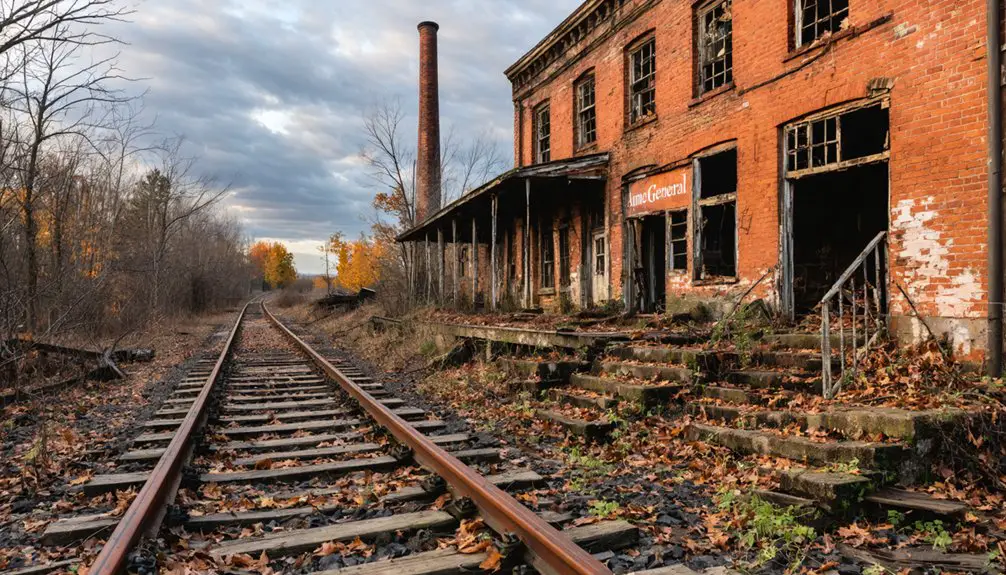
Walking through Hookstown today, you’ll find fragments of its early industrial past scattered across the landscape like pages torn from a history book.
The mills preservation efforts have kept several sites recognizable, while original wagon trails now follow the paths of modern roads.
Three landmarks worth exploring:
- Old mill foundations — Stone remnants from sawmills and grist mills still dot creek banks, quietly marking where commerce once thrived.
- Pioneer grave markers — Weathered stones honor Revolutionary War veterans who built this community from wilderness.
- Historic wagon trails — Trace original routes now paved over, connecting Hookstown’s earliest homesteads.
These sites aren’t roped off museums — they’re open land you can actually walk.
Hookstown rewards the curious traveler willing to look closely.
How to Reach Hookstown and Add Centralia to Your Route
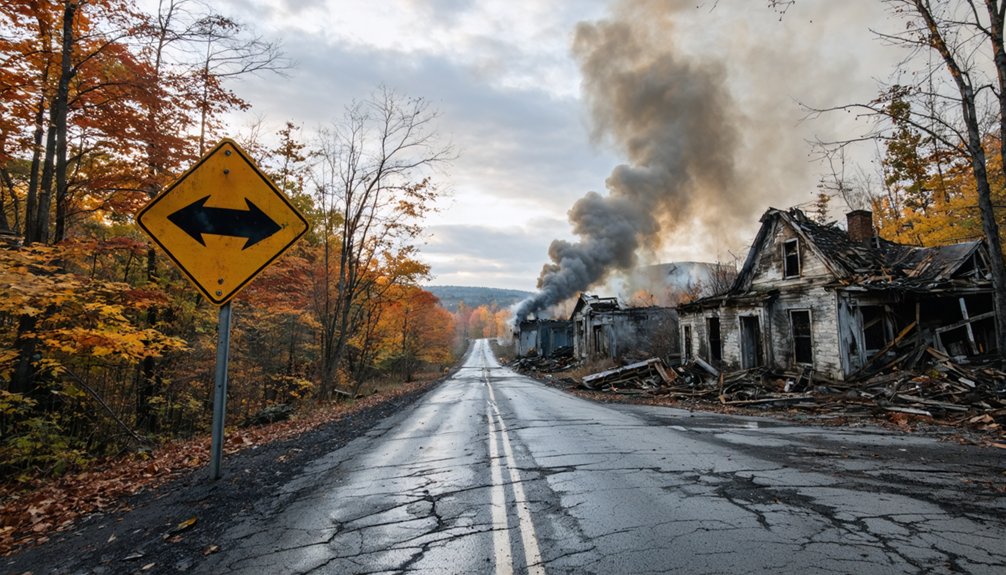
To reach Hookstown, you’ll navigate Beaver County‘s back roads, which connect seamlessly to nearby overlanding routes stretching from Ohio toward Beaver Creek State Park.
Once you’ve explored the historic mills and wagon trails, you can map a compelling detour southeast to Centralia, Columbia County’s infamous underground-fire ghost town, roughly four hours away.
Before you hit the road, though, pack carbon monoxide detectors, heed all posted warning signs, and stay clear of any cracked ground or smoke plumes at both destinations.
Reaching Hookstown Via Beaver County
Hookstown sits tucked into Beaver County, Pennsylvania, accessible via a network of rural roads that wind through the region’s rolling terrain. Road conditions vary seasonally, so plan accordingly before hitting the pavement.
Here’s how to navigate your approach:
- From the north, take State Route 168 south through Beaver County’s countryside toward Green Township.
- From the east, connect via Route 30 west, then cut south on local roads toward Hookstown.
- From Ohio, cross into Beaver County near East Liverpool, following rural routes southeast.
You’ll find the roads narrow and unhurried, matching Hookstown’s rustic character.
Check road conditions before departing, especially in winter. The drive itself rewards you with sweeping pastoral views that set the perfect tone for exploring this forgotten pioneer settlement.
Mapping Your Centralia Detour
Adding Centralia to your Hookstown road trip means committing to a serious cross-state haul — roughly 4 hours separate these two forgotten places, but the payoff justifies every mile.
Head southeast from Beaver County through central Pennsylvania toward Columbia County, where Centralia’s haunting landscape awaits.
Centralia history runs deep — an underground coal fire ignited in 1962 and has burned ever since, swallowing a once-thriving community of 1,000 residents.
Today, you’ll navigate cracked roads emitting smoke, explore abandoned structures reclaimed by nature, and witness sinkholes scarring the earth. The infamous Graffiti Highway stretch tells the story visually.
Stay alert — carbon monoxide warnings aren’t decorative.
Respect the posted signs, avoid smoke-filled ground cracks, and keep your visit purposeful.
This detour rewards the bold traveler chasing authentic American decay.
Essential Safety Travel Tips
Before you load the car and chase Pennsylvania’s forgotten corners, understanding a few critical safety rules can mean the difference between an adventure and an emergency.
Hookstown’s epidemic stories and Centralia’s ghost town legends are thrilling, but both destinations carry real risks.
- Avoid smoke vents and sinkholes — Centralia’s ground can collapse without warning, and carbon monoxide rises invisibly from cracked earth.
- Carry a gas detector — Toxic fumes don’t announce themselves; a portable CO monitor keeps you ahead of danger.
- Heed all posted warning signs — Condemned zones exist for legitimate reasons, not dramatic effect.
Stay on established paths, tell someone your itinerary, and never explore unstable terrain alone.
Freedom means knowing your limits.
The Best Spots to Photograph in Hookstown and Centralia
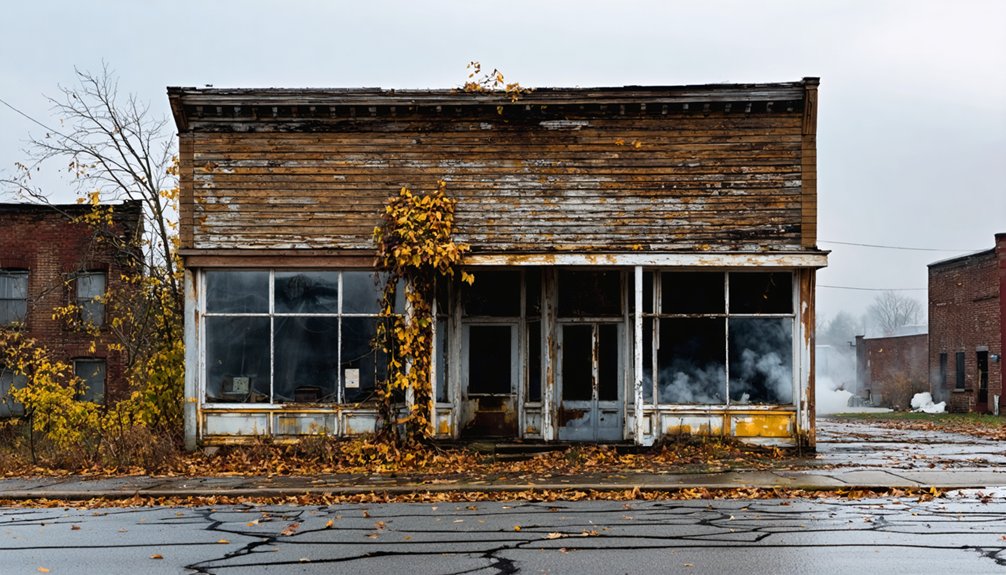
Whether you’re drawn to the rustic remnants of early American settlement or the eerie, smoke-laced streets of a modern ghost town, both Hookstown and Centralia offer striking backdrops for photography.
From pioneer ruins to smoke-filled ghost town streets, history frames every shot in Hookstown and Centralia.
In Hookstown, capture the rolling terrain of Hookstown Range and preserved historical sites that echo the region’s pioneer roots. Early morning light works beautifully against weathered structures and wagon trail remnants.
In Centralia, your best scenic locations include the hilltop mine fire wasteland, where cracked earth releases visible steam plumes, and the abandoned stretch of Route 61, still marked by faded graffiti.
The Ghost Town Church stands alone against an open sky — a powerful, haunting frame.
Key photography tips: bring a wide-angle lens, shoot during golden hour, and always stay behind warning signs when capturing ground-level smoke shots.
Ghost Town Safety Rules You Cannot Ignore
Exploring ghost towns like Centralia isn’t just an adventure — it’s a calculated risk that demands serious preparation.
Respecting ghost town regulations keeps you alive and free to explore another day. Before stepping onto unstable ground, pack essential safety gear: a carbon monoxide detector, sturdy boots, and a respirator mask.
Follow these non-negotiable rules:
- Heed all warning signs — Centralia’s cracked earth releases toxic gases that can render you unconscious within minutes.
- Never explore alone — bring someone who can pull you out of a sinkhole or get emergency help.
- Stay on marked paths — underground fires create unpredictable collapses beneath seemingly solid ground.
Your freedom to roam depends entirely on your willingness to respect these boundaries first.
Frequently Asked Questions
Are There Guided Ghost Town Tours Available for Hookstown and Centralia?
Guided tours aren’t widely documented for Hookstown or Centralia, but you can independently explore their ghost town legends and historical significance. You’ll discover eerie abandoned roads, toxic sinkholes, and pioneer heritage on your own thrilling adventure.
What Is the Best Time of Year to Visit Both Ghost Towns?
Visit both ghost towns in late spring or early fall! You’ll enjoy mild seasonal weather while exploring their historical significance. Centralia’s eerie smoke plumes and Hookstown’s rustic charm are most enchanting when nature’s colors enhance the haunting atmosphere.
Can Visitors Legally Enter Abandoned Buildings in Hookstown or Centralia?
You shouldn’t enter abandoned buildings in either location — it’s illegal trespassing with serious legal consequences. Abandoned building safety risks include unstable structures and toxic gases. Respect posted warnings and explore these fascinating ghost towns responsibly from designated public areas.
Are There Nearby Campgrounds or Overnight Accommodations Close to Hookstown?
Like ancient wayfarers seeking refuge, you’ll find camping options at Raccoon Creek State Park nearby. For lodging recommendations, check Beaver County’s cozy inns—they’re perfect basecamp spots before you explore Hookstown’s rugged, historically rich terrain freely.
Do Local Historians or Museums Offer Resources About Hookstown’s Pioneer History?
You’ll find pioneer artifacts and rich stories through local historical societies in Beaver County. They’re actively preserving Hookstown’s revolutionary roots, offering maps, documents, and exhibits that’ll deepen your appreciation for this remarkable frontier settlement’s enduring legacy.
References
- https://www.atlasobscura.com/things-to-do/pennsylvania/ghost-towns
- https://www.jeffreydonenfeld.com/blog/2009/12/exploring-the-ghost-town-of-centralia-pennslvania/
- https://www.youtube.com/watch?v=4nXkZMuH-FI
- https://www.youtube.com/watch?v=Qj5LjacccJ0
- https://en.wikipedia.org/wiki/Centralia
- https://www.treasurenet.com/threads/help-tracking-down-a-town-thats-gone.363692/