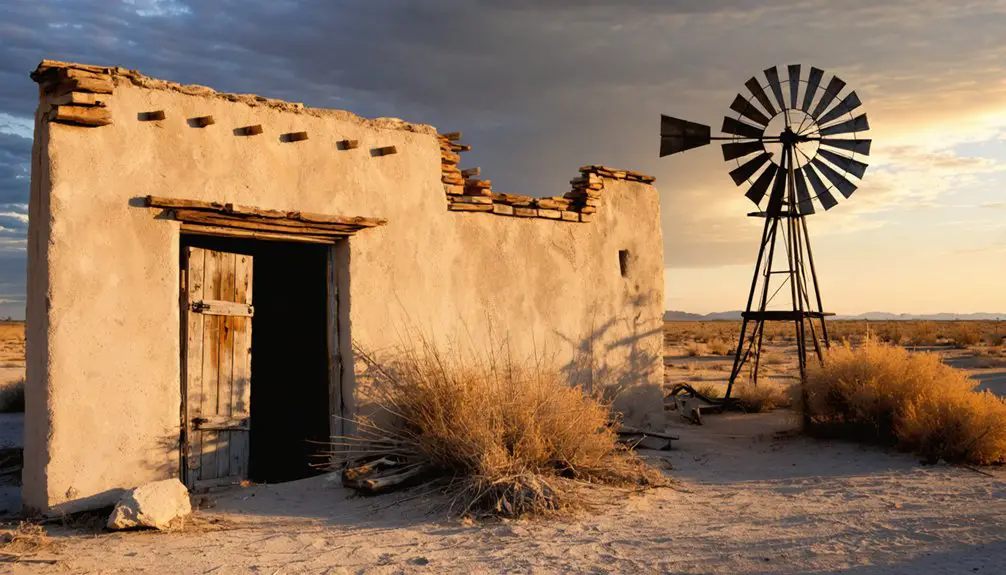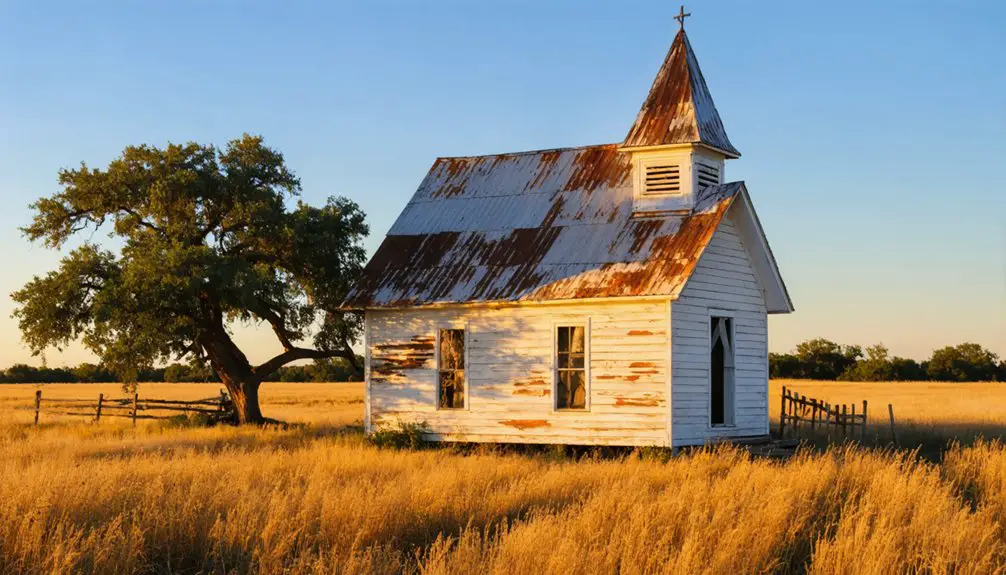
Planning a ghost town road trip to Three Oaks, Texas means heading south on FM 1344 about 11 miles from Floresville into Wilson County’s quiet brushland. Settled around 1900, this unincorporated community peaked with a school and church before most residents left after World War II. Today, roughly 150 people remain, and there’s no signage, no shops, just open skies and weathered fence lines. Stock up in Floresville first—and keep exploring to uncover everything this forgotten corner of Texas has to offer.
Key Takeaways
- Three Oaks is an unincorporated ghost town in Wilson County, reached via FM 1344 south from Floresville, approximately 11 miles.
- Use coordinates 28°58′36″N, 98°10′02″W for navigation, as no roadside signs or formal markers exist.
- Bring all supplies, as Three Oaks has no commercial district, shops, or tourist amenities.
- Visit during spring or fall for mild weather; golden hour offers ideal photography of rolling brushland and open skies.
- Extend your trip by visiting nearby ghost towns Pandora and Helena for broader rural Texas historical context.
What Is Three Oaks, Texas?
Tucked along Farm to Market Road 1344 in southern Wilson County, Three Oaks is an unincorporated Texas community that’s earned its ghost town reputation through decades of population loss rather than dramatic abandonment. Settled around 1900, it once supported a school and church, the kind of institutions that anchor local legends and pioneer stories in rural Texas history.
Most residents left following World War II, and by 2000, only about 150 people remained. You won’t find a commercial district or tourist infrastructure here.
What you’ll find is an honest slice of Texas backroads culture, sitting roughly 11 miles south of Floresville. Three Oaks rewards the traveler who values open roads, quiet history, and the freedom to explore places that exist outside the tourist trail.
What Made Three Oaks a Ghost Town After World War II?
When you look into Three Oaks‘ past, you’ll find that World War II marked a turning point that the community never recovered from.
Most residents left in the postwar years, draining the population that had once supported both a local school and a church.
You can still recognize Three Oaks as a named place on the map, but those lost institutions tell the real story of a rural community that gradually hollowed out.
Postwar Population Decline
Like so many small Texas communities, Three Oaks didn’t fade overnight — it hollowed out slowly after World War II, when broader forces pulled rural families away from places like this one. The school closed, the church quieted, and the population dropped sharply.
By 2000, only around 150 residents remained.
These postwar shifts reshaped countless Texas backroads communities:
- Economic migration drew younger generations toward cities and industrial work
- School consolidation eliminated the local anchor that kept families rooted
- Agricultural mechanization reduced the need for large rural workforces
- Fading institutions meant local legends had fewer spaces to survive and spread
Without active preservation efforts, communities like Three Oaks exist today mostly as named places on a map — quiet reminders of what rural Texas once was.
Loss Of Community Institutions
Population loss tells only half the story — what truly hollowed out Three Oaks was the collapse of the institutions that gave it shape. When the school closed and the church fell silent, the community lost its architecture of daily life.
These weren’t just buildings; they were the reasons neighbors gathered, children learned, and local legends took root. Once they disappeared, nothing anchored people to the land. Families who might’ve stayed had no reason to.
You can still drive FM 1344 and sense that absence — the quiet isn’t peaceful so much as it’s vacant. Three Oaks didn’t vanish overnight; it unraveled institution by institution until only the name remained on maps and in the memories of those who once called it home.
What You’ll Actually Find When You Arrive at Three Oaks
When you turn onto FM 1344 and roll through southern Wilson County, you’ll find quiet farmland stretching in every direction rather than a marked town center or welcome sign.
Three Oaks won’t announce itself with tourist infrastructure, so you’ll navigate by landscape and a sense of place shaped by over a century of rural Texas life.
Look closely and you’ll spot remnants of the community that once supported a school and church, quiet markers of the lives that filled this stretch of road before postwar decline set in.
Rural Roads And Scenery
Driving down FM 1344 into Three Oaks, you’ll trade traffic and strip malls for open sky, scrubby South Texas brush, and the kind of quiet that only rural Wilson County can offer. The landscape itself carries cultural significance, telling stories of farming families and local legends tied to a community that once thrived here.
Watch for these highlights along the route:
- Rolling brushland stretching toward the horizon with minimal development
- Weathered fence lines marking old property boundaries from early settlers
- Open caliche roads branching off FM 1344 into deeper rural terrain
- Wide, unobstructed skies perfect for photography at golden hour
You’re not just passing through scenery — you’re reading a living historical landscape that shaped Three Oaks from its settlement around 1900.
Remnants Of Community Life
Beyond the scenery that frames your approach, Three Oaks reveals itself as something quieter and more poignant — a community held together now by memory more than infrastructure. What you’ll find isn’t a preserved main street or a curated museum stop. Instead, you’ll encounter the ghost of a functioning rural settlement — one that once supported a school and a church, two institutions that anchored daily life here for generations.
Those structures represent the clearest historical anecdotes this community offers. Residents gathered, children learned, and families worshipped before postwar migration quietly emptied the roads.
Local legends likely linger among longtime Wilson County families who remember Three Oaks at its peak. You’re fundamentally reading a landscape now, tracing absence as much as presence, which makes the stop unexpectedly powerful.
How to Get to Three Oaks on FM 1344
Finding Three Oaks is straightforward once you know to follow Farm to Market Road 1344 through southern Wilson County. Head about 11 miles south of Floresville, and you’ll roll right through this quiet community steeped in community heritage and local legends.
Here’s what to keep in mind before you hit the road:
- Start in Floresville – fuel up and grab food since Three Oaks has no services
- Follow FM 1344 south – the route is direct and easy to navigate
- Set your coordinates – 28°58′36″N, 98°10′02″W keeps you on track
- Plan a drive-through visit – there’s no formal town center, just open rural road
You’re not chasing a tourist trap here. You’re chasing real Texas backroads history.
Where to Stop in Floresville Before or After Your Drive

Floresville makes the perfect base camp before you head down FM 1344, and it’s worth slowing down there instead of treating it like a simple pit stop. Fill your tank, grab a meal at one of the local diners, and ask around — longtime residents often carry local legends about rural communities like Three Oaks that no historical marker ever captures.
Floresville sits along the San Antonio River, and its geographic features give you a sense of the rolling south Texas landscape you’ll follow southward. The Wilson County courthouse anchors the town square and rewards a quick walk.
Once you’ve soaked in Floresville‘s character, the eleven-mile drive to Three Oaks feels intentional rather than rushed, connecting you to the broader story of this quiet corner of Texas.
When Is the Best Time to Drive Through Wilson County?
Wilson County rewards patient travelers, and timing your drive can shape the entire experience. The region’s settlement patterns and historical demographics tell a richer story when you visit under the right conditions.
Consider these seasonal advantages before you hit FM 1344:
- Spring (March–May): Mild temperatures and wildflowers make backroad driving genuinely pleasant
- Fall (September–November): Cooler air and clearer skies improve visibility across open ranch land
- Weekday mornings: Light traffic lets you pause freely without pressure
- Avoid midsummer: South Texas heat peaks aggressively, limiting your comfort outside the vehicle
You’ll want flexibility to slow down, pull over, and absorb the quiet landscape where a school and church once anchored daily life. Three Oaks doesn’t demand a schedule—it rewards curiosity.
Which Nearby Texas Ghost Towns Can You Combine With This Trip?
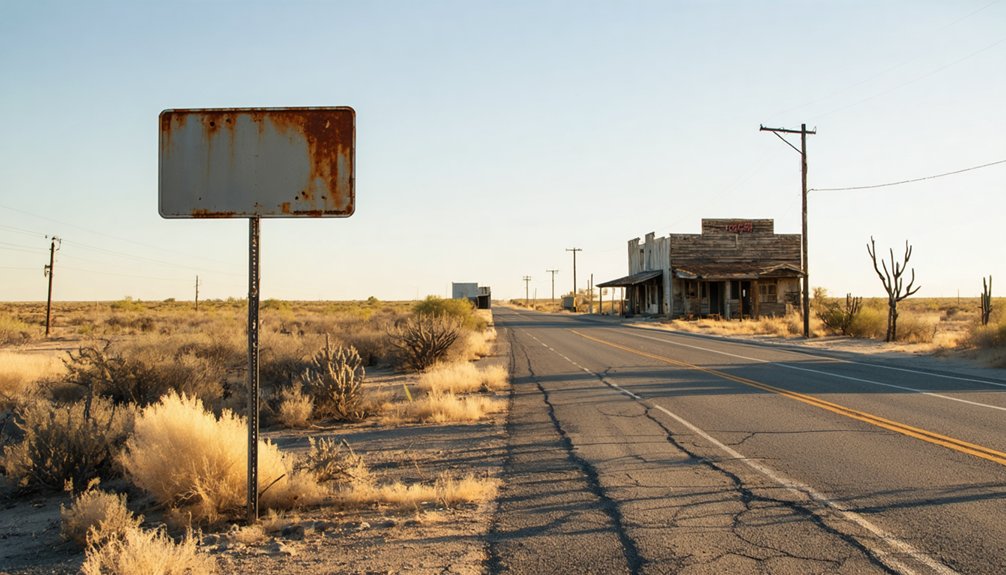
Once you’ve mapped out your ideal driving window, it makes sense to stretch the trip beyond Three Oaks itself. Wilson County and its surrounding region hold several faded communities worth adding to your route.
Pandora, southeast of Floresville, carries its own cultural significance as a once-active farming settlement that quietly slipped into obscurity.
Helena, the former Karnes County seat, offers something richer — local legends surrounding its deliberate decline after losing the railroad make it one of Texas’s most compelling ghost town stops.
Each community adds a distinct layer to your understanding of rural Texas history.
Linking these stops along FM roads keeps your drive authentic and unhurried, letting you absorb the landscape and the stories embedded in every crossroads you pass through.
Why Three Oaks Has No Shops, Signs, or Tourist Infrastructure
Three Oaks never developed the commercial backbone that tourist infrastructure requires. Like most Texas farming communities, it grew around family land, a school, and a church — not retail or tourism.
When residents left after World War II, no business district survived to carry local legends forward.
You won’t find:
- Roadside signs marking the community’s boundaries
- Shops, diners, or fuel stops within the community
- Formal historical markers documenting its past
- Any tourist-facing amenities or visitor centers
That absence is actually the point. Three Oaks rewards travelers who prefer raw, unfiltered backroads over curated experiences.
You’re driving through a living ghost town shaped by quiet decline, not neglect. Bring your own supplies from Floresville, keep your expectations honest, and let the landscape tell the story.
Where to Find More Three Oaks History Before You Visit

Before you make the drive out on FM 1344, a little archival legwork will give you far more context than the landscape alone can offer. Start with the Wilson County Clerk’s office in Floresville, where land records and school district files can surface historical anecdotes that no roadside marker will ever tell you.
The Texas State Library and Archives Commission holds additional rural community records worth searching. Online databases like the Handbook of Texas offer a reliable baseline, though the Three Oaks entry remains thin.
Local legends sometimes live in county historical society collections, so contact the Wilson County Historical Commission directly. A quick call before your visit often *accesses* unpublished notes, old photographs, and firsthand accounts that transform a simple backroads drive into something genuinely meaningful.
Frequently Asked Questions
Is Three Oaks Safe to Visit as a Solo Traveler?
You’ll find Three Oaks safe to explore solo! It’s a quiet rural backroad stop where you can chase local legends and appreciate historical preservation. Pair your visit with nearby Floresville for added security and convenience.
Can You Legally Park or Stop Along FM 1344 There?
You can typically pull over on FM 1344’s rural shoulders without formal parking regulations restricting you. Watch for stopping restrictions near intersections, stay fully off the pavement, and you’ll explore Three Oaks freely and safely.
Are There Any Ghost Town Tours That Include Three Oaks?
Like a hidden gem on an unmarked map, you won’t find organized ghost town tours featuring Three Oaks. You’ll forge your own path, uncovering its historical landmarks and local legends independently along FM 1344’s quiet, freedom-calling backroads.
Does Wilson County Have Any Camping Near Three Oaks?
The available sources don’t confirm camping near Three Oaks, but you’ll find options around Floresville. While exploring historical landmarks, you can refuel at local dining spots before hitting the open road toward this fascinating ghost town.
Is Three Oaks Accessible for Visitors With Mobility Limitations?
You’ll find Three Oaks accessible — it’s along FM 1344, so you can drive through and explore its historical landmarks and local folklore from your vehicle, making it a freedom-friendly destination despite its unincorporated, undeveloped character.
References
- https://www.wilsoncountyhistory.org/talk-three-oaks
- https://en.wikipedia.org/wiki/Three_Oaks
- https://en.wikipedia.org/wiki/Oak_Hill